
The Power of Specificity: Mastering Long-Tail SEO for Sustainable Growth
Modern search landscapes reward relevance over raw volume. For years, digital marketers obsessed over “head terms” those short, high-competition keywords that everyone wants to rank for. However, savvy businesses now look toward the horizon of the search demand curve. This is where long-tail SEO lives. By focusing on specific, multi-word phrases, brands connect with users who know exactly what they want. These searchers are not just browsing; they are often ready to act. Understanding how to harness this specific intent can transform a struggling website into a high-converting digital asset.
Boost your website’s search visibility and drive high-quality organic traffic by exploring our comprehensive SEO services designed for growth.
Defining Long-Tail SEO in the Modern Era
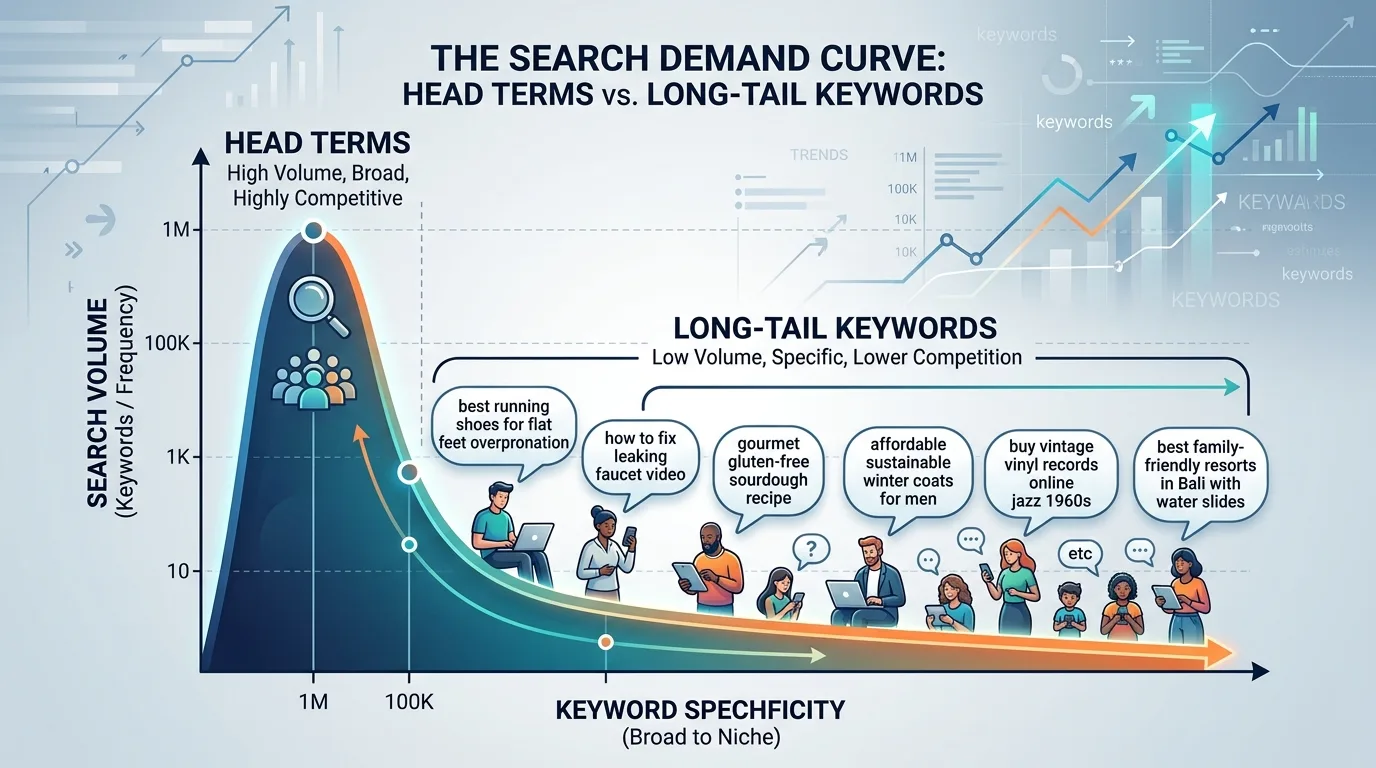
Long-tail SEO involves targeting search queries that are highly specific and typically consist of three or more words. While these individual phrases have lower search volumes compared to broad “seed” keywords, they collectively make up the vast majority of all search traffic. The term originates from the “long tail” of a demand curve, where a few items sell in high quantities, but a massive number of niche items account for significant total volume. In search terms, the “head” might be “coffee,” while the “long tail” is “organic fair-trade dark roast coffee beans for espresso.”
The shift toward natural language makes this strategy more critical than ever. People now talk to their devices and ask full questions rather than typing fragmented nouns. Search engines have evolved to understand the context and intent behind these longer phrases. When you optimize for the long tail, you are essentially answering a very specific question for a very specific person. This alignment creates a seamless experience for the user and signals high relevance to search algorithms.
Why Long-Tail Keywords Outperform Broad Terms

Broad keywords often attract “window shoppers.” A person searching for “marketing” might want a definition, a job, or a history lesson. However, a person searching for “outreach marketing services for small tech startups” has a clear, actionable goal. Long-tail keywords offer significantly higher conversion rates because they filter out irrelevant audiences. You spend your resources attracting visitors who are further along in the buyer’s journey, which directly impacts your return on investment.
Competition levels also drop as specificity increases. Thousands of websites fight for the top spot for “leather bags,” making it nearly impossible for a new site to break through. Conversely, a niche phrase like “handmade tan leather messenger bags for laptops” has fewer competitors. This allows smaller brands to claim the top position in search results much faster. By dominating many of these smaller niches, you build a cumulative traffic stream that is more stable and less prone to sudden drops from major algorithm shifts.
The Psychology of Niche Search Intent
To master long-tail SEO, you must understand the “why” behind the search. Every query falls into a category of intent: informational, navigational, or transactional. Long-tail searches are often rich in transactional intent. When a user adds modifiers like “best,” “buy,” “near me,” or specific brand names and sizes, they provide a roadmap of their needs. They have already done the basic research and are now looking for a specific solution that fits their criteria.
Optimizing for these nuances requires a deep dive into customer personas. You must think about the specific problems your audience faces. If you provide digital solutions, your customers aren’t just looking for “web help.” They are looking for ways to streamline their specific business processes. Addressing these pain points through long-tail content establishes your brand as an authority. It shows the user that you understand their unique situation, which builds trust before they even click your “Contact Us” button.
Finding Your Niche: Keyword Research Techniques

Effective keyword research for the long tail requires looking beyond basic tools. While traditional keyword planners provide data, they often overlook the “low volume” gems that drive the most value. Start by using the “People Also Ask” section and “Related Searches” on search result pages. These sections reveal the exact phrasing real people use when they want to dig deeper into a topic. These are pre-validated long-tail opportunities that search engines already recognize as relevant.
Forums and community sites like Reddit or Quora are goldmines for long-tail discovery. Look for the specific questions users ask in your industry. If multiple people ask “How do I edit product photos for a minimalist aesthetic?”, you have a perfect long-tail keyword. You can also analyze your own internal site search data. What are people typing into your search bar? Often, your current audience is telling you exactly what content you need to create next to satisfy their curiosity.
Structuring Content for Specific Queries
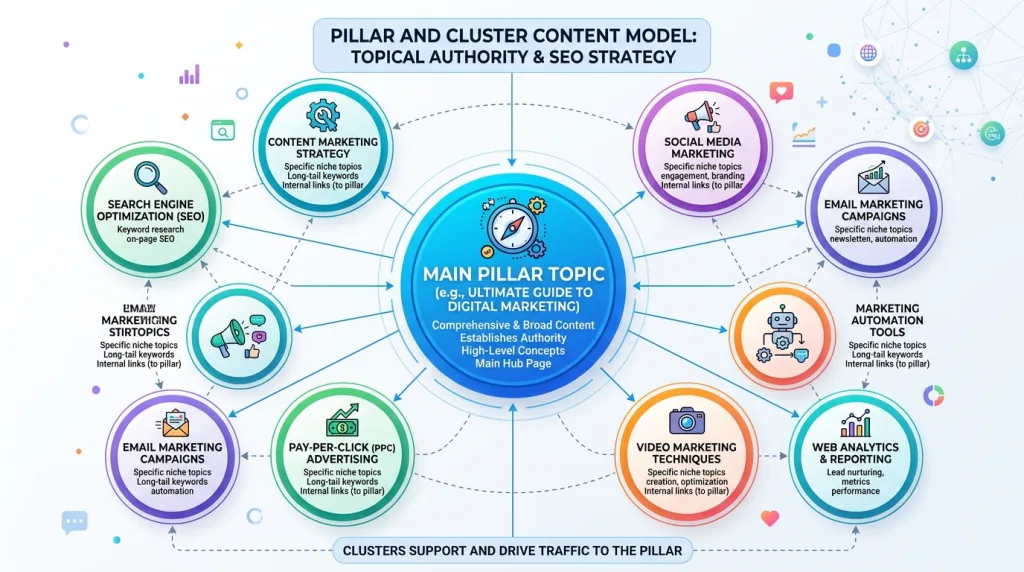
Once you identify your keywords, you must build content that satisfies the intent completely. A common mistake is creating thin content for every long-tail keyword. Instead, group related long-tail keywords into a single, comprehensive guide. This “pillar and cluster” model allows you to target a primary topic while capturing dozens of specific variations. Use headers to address specific questions directly, making it easy for search engines to pull your content as a featured snippet.
Readability plays a massive role in retaining the traffic you earn. Use active voice to keep the reader engaged and move them through the information quickly. Break down complex ideas into bullet points and numbered lists. When you answer a specific long-tail query, provide the answer early in the text. This “inverted pyramid” style of writing ensures the user finds value immediately, reducing bounce rates and improving your overall site authority.
The Role of User Experience in Long-Tail Success

Ranking for a long-tail term is only half the battle; keeping the visitor on the page is the other half. If a user clicks on a specific query and finds a slow-loading, cluttered website, they will leave. High-quality visuals and clean layouts are essential. For businesses in visual industries, such as e-commerce, ensuring your images are crisp and professional is vital. High-quality photo editing ensures that when someone searches for a specific product detail, they see exactly what they expect.
Mobile responsiveness is another non-negotiable factor. Many long-tail searches happen on the go, via voice search or mobile browsers. If your site does not function perfectly on a smartphone, you lose the “near me” and “how to” traffic that fuels long-tail growth. Speed, accessibility, and intuitive navigation create a positive feedback loop. When users spend more time on your site, search engines view your content as more valuable, further boosting your rankings for even more specific terms.
Measuring the Impact of Your Strategy

Tracking the success of long-tail SEO requires a shift in mindset. You shouldn’t just look at total sessions; look at the number of unique pages receiving traffic. A healthy long-tail strategy results in a “flat” traffic distribution where many different blog posts and service pages contribute to the total. Use tools like Search Console to monitor which specific queries are driving clicks. If you see a rise in impressions for phrases you haven’t explicitly targeted, it means your content is naturally relevant.
Conversion tracking is the ultimate metric for long-tail success. Since these keywords are closer to the purchase point, you should see a higher conversion rate compared to your broad terms. Monitor how these specific visitors move through your funnel. Are they signing up for newsletters? Are they requesting quotes? If the traffic is high but conversions are low, you may have a “mismatch” between the keyword intent and the content on the page. Refine your messaging to ensure you are meeting the user’s specific expectations.
Integrating Long-Tail SEO with Social Proof
Trust is the currency of the internet. When a user arrives via a very specific search, they are often looking for a solution to a specific problem. Showing them that you have solved this problem for others is incredibly persuasive. Case studies and testimonials that use long-tail language are very effective. For example, a testimonial shouldn’t just say “Great service.” It should say “The lead generation strategies helped our small agency increase qualified calls by 40%.”
By mirroring the long-tail language in your social proof, you validate the user’s search journey. They feel they have found the “right” place because you are speaking their specific language. This creates a cohesive brand experience from the search engine result page to the final conversion. It turns a cold searcher into a warm lead who feels understood and valued by your brand.
Advanced Link Building for Niche Rankings
While long-tail keywords are easier to rank for, they still benefit from a strong backlink profile. The key here is relevance. A few links from niche-specific blogs are worth more than a dozen links from unrelated high-authority sites. Focus on guest posting on platforms that cater to your specific sub-industry. When you build these links, use natural variations of your long-tail keywords in the anchor text.
Internal linking is equally powerful and entirely within your control. Link your long-tail blog posts to your main service pages. This passes “link juice” from your informational content to your transactional pages. For instance, an article about backlink quality should naturally link to a professional SEO backlink service page. This helps search engines understand the relationship between your niche topics and your core business offerings, strengthening your overall site structure.
Common Pitfalls to Avoid in Long-Tail SEO
One major mistake is “keyword cannibalization.” This happens when you create multiple pages targeting the same long-tail keyword. Instead of ranking higher, your pages compete against each other, confusing search engines and diluting your authority. Always check your existing content before creating something new. If you already have a page that is “close enough,” consider updating and expanding it rather than starting from scratch.
Another pitfall is ignoring the “user journey.” Do not just provide information; provide a path forward. Every long-tail article should have a clear call to action. If someone searches for “how to improve website speed,” don’t just give them a list of tips. Tell them how your services can handle the technical heavy lifting for them. Balancing helpfulness with business goals is the hallmark of a professional SEO strategy.
The Future of Search and Specificity
Search behavior continues to move toward conversational and highly detailed queries. The rise of smart speakers and wearable tech means people are asking for help in real-time, often using full sentences. This “natural language” trend only increases the importance of long-tail SEO. Brands that focus on being the “best answer” to specific questions will thrive, while those clinging to broad, generic terms will find it increasingly expensive to compete.
As search engines become better at understanding user context, they will prioritize content that demonstrates true expertise. Deep, well-researched content that covers every facet of a long-tail topic will always win. This is not about “tricking” an algorithm; it is about providing genuine value to a human being. When you align your business goals with the needs of your niche audience, you create a sustainable foundation for long-term digital success.
Experience the difference that expert digital strategies can make for your brand by visiting Vastcope’s main platform today.
Frequently Asked Questions (FAQ)
1. How many words should a long-tail keyword have?
Typically, long-tail keywords consist of three or more words. However, the definition is less about the word count and more about the specificity and search volume. A two-word phrase can be “long-tail” if it is highly niche and specific.
2. Is long-tail SEO better than short-tail SEO?
Neither is objectively “better,” but they serve different purposes. Short-tail keywords build broad brand awareness and high traffic volume. Long-tail SEO drives higher conversion rates and is much easier for new or smaller websites to rank for.
3. Do long-tail keywords have enough traffic to be worth it?
Individually, they have low volume. However, because there are millions of long-tail variations, they collectively make up about 70-80% of all search traffic. Targeting hundreds of long-tail terms can result in massive total traffic.
4. How long does it take to rank for long-tail keywords?
Because the competition is lower, you can often see results for long-tail keywords within a few weeks, whereas broad head terms can take many months or even years of consistent effort to reach the first page.
5. Can I use the same long-tail keyword on multiple pages?
No, this is called keyword cannibalization. It confuses search engines and causes your own pages to compete against each other. It is better to have one definitive, high-quality page for a specific long-tail topic.
6. Does voice search affect long-tail SEO?
Yes, significantly. People using voice search tend to speak in complete sentences and ask direct questions. This naturally aligns with long-tail SEO strategies, making specific, conversational content more valuable.
7. How do I find long-tail keywords for free?
You can use Google’s “Autocomplete” feature, the “People Also Ask” boxes, and the “Related Searches” at the bottom of the results page. Forums like Reddit and industry-specific message boards are also excellent free resources.
Keep reading
All articles
Lead Generation: A Complete Guide to Building a High-Converting Pipeline
The modern marketplace moves faster than ever before. Today, capturing consumer attention requires more than just flashing a generic advertisement or blasting…
Read article
The Ultimate Guide to SEO Conferences in 2026: Where to Learn, Network, and Grow
The digital marketing world never sleeps, but 2026 promises to be a waking dream for SEO professionals. Search engines continue to evolve…
Read article
Top 10 SEO Goals Your Business Should Target for 2026
Search engine optimization never stands still. Just when you master one update, the next wave of technology reshapes how people find information.…
Read article