If you’re a business owner or content creator, you’ve likely noticed Google search results looking different. At the top of many searches, you now see an AI-generated summary, pulling insights from across the web to answer your question directly. This is Google’s AI Overview, and it’s fundamentally changing how people find information. If you’re wondering how to get your website into that prime real estate, you’re in the right place.
Let Vastcope’s team help you build a content strategy designed for AI visibility.
What Exactly Is a Google AI Overview?
A Google AI Overview is an AI-generated summary that appears at the very top of search results, above all the regular blue links. Instead of listing ten links, Google now synthesizes information from multiple trusted sources and delivers a direct answer right there on the results page.
Think of it as Google becoming an answer engine, not just a search engine. Powered by advanced models like Gemini 2.0, these overviews analyze context and perspectives across dozens of pages, then build a fresh, synthesized answer.
Here’s what you absolutely need to understand: Google isn’t just copying one page. It’s reading many sources and assembling an answer. Your goal is to become one of those sources Google trusts enough to cite.
As of late 2025, AI Overviews appear on roughly 16% of all queries. In some industries—like healthcare and B2B technology—that number jumps to nearly 50% or higher. More importantly, coverage continues to grow in commercial niches where buying decisions happen.
Why AI Overviews Change Everything
For the past decade, success meant ranking in the top three organic positions. AI Overviews rewrite those rules in two critical ways.
First, your page can get cited in an AI Overview even if it doesn’t rank in the top ten. Research shows only 33.4% of AI Overview links appear in the top 10 organic results for any given query. A page sitting at position 15 or 20 can still drive traffic if it provides the clearest, most direct answer.
Second, the traffic you get from AI Overviews tends to be more valuable. When people click through from an AI Overview, they arrive more informed, more qualified, and closer to a decision. You get fewer clicks but higher conversion rates.
Citations vs. Mentions: Know the Difference
Your website can appear in AI Overviews in two ways. A citation means Google directly links to your page as a source—users see clickable cards or links inside the AI-generated summary. A mention happens when Google names your brand, product, or website in the AI Overview text, though not necessarily with a clickable link.
Both matter for your visibility. Citations drive direct traffic. Mentions build brand awareness and can lead to more branded searches later.
Which Searches Trigger AI Overviews?
Not every query triggers an AI Overview. Question-based searches represent your highest opportunity. Queries phrased as questions or how-to’s are now 84% more likely to display an AI Overview.
Target queries that contain words like “how,” “tips,” “practices,” and “best”. For example:
-
“How do I improve my website’s loading speed?”
-
“What is the best way to do local marketing for a service business?”
-
“Why is my ecommerce store not converting?”
These are the exact questions your potential customers type into Google every day. Structure your content around answering them directly.
How to Optimize Your Content for AI Overviews
Now let’s get into the practical strategies. These are the tactics that actually move the needle based on current data and research.
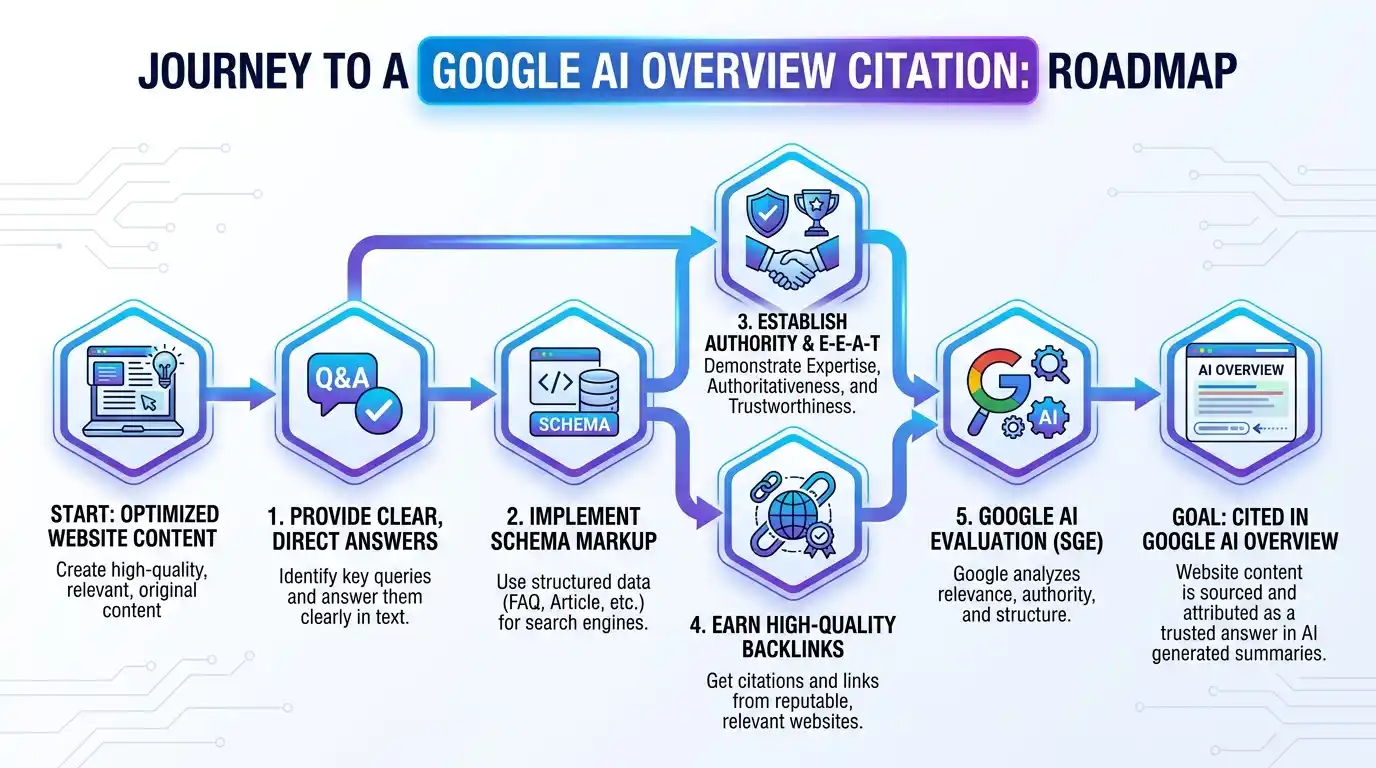
1. Lead with the Answer in Your First 100 Words
Google’s AI doesn’t want to dig through three paragraphs of background before finding your actual answer. Neither does your reader. Start sections with a direct definition or takeaway before adding context.
Place a concise, 40–60 word summary directly beneath your question-based headings. Many experts call this the “Atomic Answer” framework. The AI prefers these bite-sized blocks because it can easily ingest and summarize them.
For example, if you’re answering “How do I optimize my site for mobile,” your first sentence should deliver the core answer. Then expand with details, examples, and supporting evidence.
2. Write Headers That Mirror Real User Questions
Use clear H2 and H3 headers that read like actual search queries. If someone typed a question into Google, that question should look like a header on your page.
Avoid vague headers like “Why It Matters” or “Key Considerations.” Instead use explicit, question-based headers:
-
“Why Page Speed Still Impacts Your Rankings in 2026”
-
“How Does Google’s AI Actually Use Your Content?”
-
“What’s the Fastest Way to Improve My Site’s Authority?”
This serves two purposes: it helps real readers scan your content, and it signals to Google’s AI exactly what each section answers.
3. Build Topical Authority Through Query Fan-Outs
Google’s AI uses a process called “query fan-out” to break a single query into multiple sub-queries, gathering enough context for a comprehensive response. A page’s chances of being cited increase by 161% if it ranks for at least one of those fan-out sub-queries.
What does this mean for you? Don’t just write one article on a topic. Build content clusters that answer every related question.
For example, if you sell project management software, don’t just write “best project management tools.” Also write about:
-
Pricing comparisons between popular platforms
-
Features specifically for remote teams
-
How to choose software for different team sizes
-
Common implementation mistakes
When you cover the entire topic landscape, Google sees you as an authority and is far more likely to cite your pages.
4. Use Structured Data (Schema Markup) Correctly
Schema markup is code you add to your website that tells search engines what your content means. It turns unstructured content into clearly defined elements that machines can interpret with confidence. Learn the basics at Schema.org, the official documentation for structured data.
Around 65% of pages cited by AI Mode use schema markup. The schema types that show the strongest impact across Google AI Overviews include:
-
Article schema for blog posts
-
FAQPage schema for question-and-answer sections
-
HowTo schema for step-by-step guides
-
Organization schema for company information
-
LocalBusiness schema for location-based services
Implementing schema doesn’t guarantee inclusion, but it significantly improves your chances. Google’s Knowledge Graph pipeline uses structured data to understand entity relationships, which directly influences AI source selection.
5. Demonstrate E-E-A-T Throughout Your Site
E-E-A-T stands for Experience, Expertise, Authoritativeness, and Trustworthiness. Google’s AI uses these as filters to determine which sources are “safe to cite”.
Here’s how to build these signals:
-
Add author names and bios with credentials. A simple author bio aligned with E-E-A-T increases LLM trust significantly.
-
Include first-hand insights and proprietary data. AI models prefer content with original data and real experience.
-
Cite authoritative, expert-led sources. Reference industry research, academic studies, and recognized experts in your field.
-
Keep your content updated. Fresh, current information signals reliability to Google’s AI systems.
6. Make Your Content Scannable and Structured
Google’s AI needs to quickly extract key information from your pages. Use formatting that makes extraction easy:
-
Bullet points for lists and key features
-
Numbered steps for procedural content
-
Short paragraphs (2-3 sentences maximum)
-
Bold text for key takeaways
-
Tables for comparisons and data
AI systems actively look for definitions and glossaries. Consider adding a “Terminology Glossary” to long-form articles with short, scannable definitions of key terms.
7. Target Long-Tail, Informational Queries
Short, commercial keywords rarely trigger AI Overviews. Instead, focus on longer, question-based phrases that signal informational intent.
Instead of targeting “SEO services,” target “how do I choose the right SEO services for my small business.” Instead of “web design,” target “what’s the average cost of web design for an ecommerce store.”
These longer queries have less competition and higher conversion potential. When someone asks a detailed question, they’re further along in their decision process.
Technical Optimization for AI Visibility
Content alone won’t get you into AI Overviews. Your technical foundation matters just as much.
8. Ensure Fast Loading Speeds
Google’s AI won’t consider pages that take too long to load. Page speed is a direct ranking factor for traditional search, and it matters even more for AI source selection. Google’s crawlers need to quickly access and evaluate your pages.
Use tools like Google PageSpeed Insights to identify and fix speed issues. Common improvements include:
-
Compressing images without losing quality
-
Minimizing JavaScript and CSS files
-
Using browser caching
-
Choosing a fast, reliable hosting provider
9. Optimize for Mobile Devices
With mobile-first indexing, Google primarily uses the mobile version of your content for ranking and evaluation. Your site must be fully responsive and easy to navigate on smartphones and tablets.
Test your site on multiple devices. Ensure buttons are tappable, text is readable without zooming, and forms work correctly on small screens.
10. Create a Clear Internal Linking Structure
Internal links help Google’s AI understand how your content connects. Link related articles to each other using descriptive anchor text. This builds topic clusters and signals which pages are most important on your site.
When you write a new article, link to 2-3 relevant existing articles on your site. When you update old articles, link to newer content. This keeps your internal link graph fresh and helps AI systems discover your full topical coverage.
11. Use Clear, Descriptive Title Tags
Your title tag tells Google what each page is about. Use clear, optimised title tags that accurately represent each page’s content. Include your target question or key phrase near the beginning of the title.
For example, instead of “SEO Tips 2026,” use “How to Optimize Your Website for SEO in 2026: 10 Proven Tips.”
Need help with technical SEO optimization? Vastcope’s experts can audit your site.
Off-Page Signals That Boost AI Citations
What happens outside your website also influences whether Google’s AI cites your content.
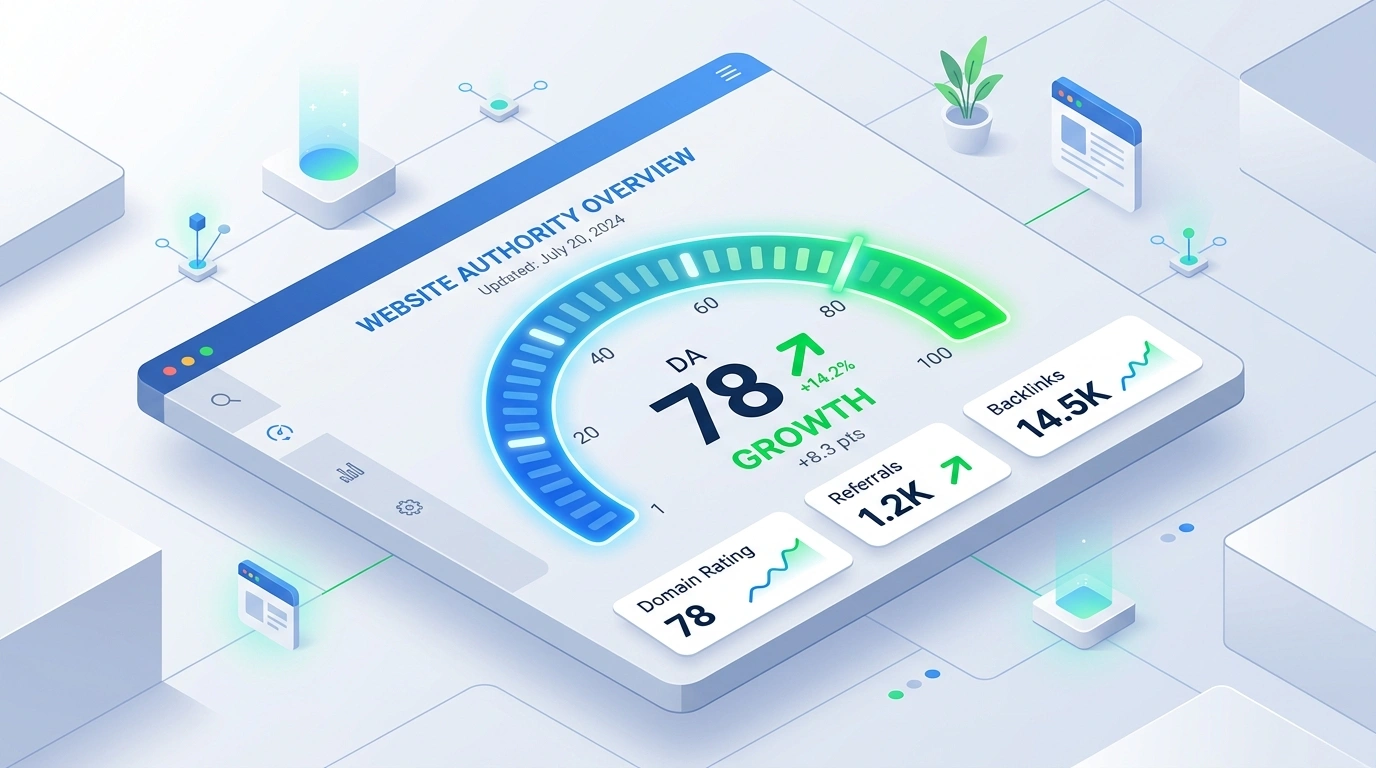
12. Build High-Quality Backlinks from Trusted Sources
Backlinks remain a strong signal of authority. Google’s AI Overviews mostly link to relevant, highly trusted sites with established authority. Focus on earning links from:
-
Industry publications and news sites
-
Educational institutions (.edu domains)
-
Government websites (.gov domains)
-
Recognized industry blogs and forums
-
Wikipedia and other high-authority platforms
A single backlink from a trusted source can do more for your AI visibility than dozens of links from low-quality directories.
13. Maintain Consistent Brand Mentions
Brand mentions—even without links—push entity confidence, especially when they come from trusted sources. When other reputable websites talk about your brand, Google’s AI takes notice.
Encourage brand mentions by:
-
Participating in industry podcasts and interviews
-
Contributing guest posts to respected publications
-
Getting featured in roundup articles and resource lists
-
Engaging in relevant online communities and forums
14. Build Presence on Authoritative Third-Party Platforms
Research shows YouTube (~23.3%), Wikipedia (~18.4%), and Google.com (~16.4%) account for around 58.1% of all AI Overview sources. AI Overviews also rely heavily on forums like Quora and Reddit.
Don’t just focus on your own website. Build presence on these platforms:
-
Create helpful YouTube videos that answer common questions in your industry
-
Contribute thoughtful answers on Quora and Reddit
-
Ensure your Wikipedia page (if you have one) is accurate and up-to-date
-
Get listed in reputable industry directories
When your brand appears consistently across these high-authority platforms, Google’s AI recognizes you as a legitimate source worth citing.
How to Measure and Track Your AI Overview Performance
You can’t improve what you don’t measure. Here’s how to track whether your optimization efforts are working.
Use Google Search Console
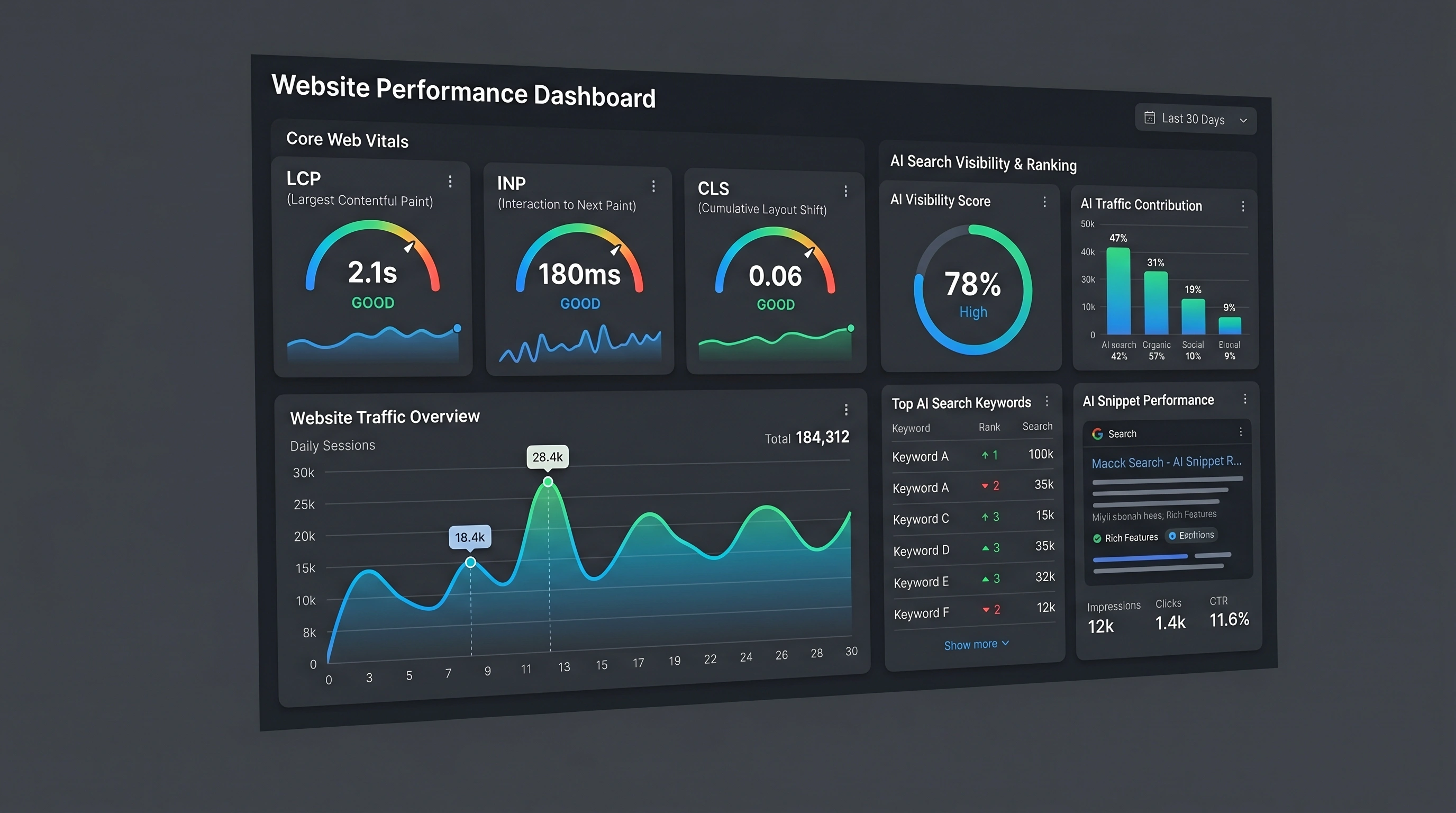
Google Search Console shows you which queries drive impressions and clicks to your site. Look under the “Performance” report and review the queries where your pages are already ranking. If you see question-based queries gaining traction, you’re on the right track.
Pay attention to click-through rates. When an AI Overview appears, organic CTR often drops significantly. Research shows CTR for the first organic result can drop by 34.5% when an AI Overview is present. Don’t panic—this is normal. Focus on earning citations, not just maintaining old CTR benchmarks.
Monitor AI Overview-Specific Tools
Several SEO platforms now offer AI Overview tracking features:
-
SE Ranking’s AI Overviews tracker shows whether your site appears for target keywords
-
Semrush and Ahrefs have added AI visibility metrics
-
Surfer SEO provides AI citation analysis
Use these tools to identify which pages already earn AI citations and which queries trigger AI Overviews in your industry.
Track Brand Mention Volume
Set up Google Alerts for your brand name and key products. Monitor how often your brand gets mentioned across the web—both with and without links. Increasing mention volume over time signals growing authority to Google’s AI.
Common Mistakes That Kill Your Chances
Avoid these pitfalls that prevent websites from earning AI citations.
Hiding Your Answers Behind Walls of Text
If your answer sits buried under three paragraphs of introduction, Google’s AI won’t find it. Always lead with your core answer. Put the key takeaway in the first sentence, then add supporting details.
Writing for Robots Instead of Humans
Don’t stuff keywords or write unnatural sentences. Google’s AI evaluates content based on readability and usefulness. Write clearly and conversationally. If your content helps real people, it will also work for AI.
Ignoring Mobile Users
Over 60% of Google searches happen on mobile devices. If your site provides a poor mobile experience, Google’s AI will favor competitors with better mobile optimization.
Forgetting to Update Old Content
Outdated content signals low authority. Review and refresh your existing articles regularly. Update statistics, add new examples, and remove obsolete information. Google’s AI prefers current, accurate sources.
Targeting the Wrong Types of Queries
AI Overviews don’t appear for every search. Don’t waste time optimizing for purely navigational or transactional queries like “Nike shoes” or “Amazon login.” Focus on informational and how-to queries where AI Overviews actually trigger.
Let Vastcope build you a backlink strategy that attracts AI citations.
Looking Ahead: The Future of AI in Search
AI Overviews aren’t going away. Google continues expanding this feature across more query types and countries. AI Mode—a dedicated conversational search interface—is already in testing. Read Google’s official announcement on AI Overviews and search generative experience to stay updated.
What does this mean for your long-term strategy?
First, expect AI Overviews to appear on an even wider range of searches. They’re no longer limited to complex research queries. In 2026, they appear across local intent, service comparisons, and industry-specific questions.
Second, zero-click searches will likely increase. Users find answers directly in AI summaries without visiting websites. This sounds scary, but remember: when users do click through from AI Overviews, they arrive highly qualified and conversion-ready.
Third, answer engine optimization will become standard practice. The shift from “results” to “answers” is permanent. Businesses that adapt early will capture visibility while competitors play catch-up.
Final Thoughts
Getting your website into Google AI Overviews isn’t about tricking an algorithm. It’s about creating genuinely helpful content that answers real questions clearly and authoritatively. Lead with your answer. Structure your content for scannability. Build genuine authority through quality backlinks and consistent brand presence.
Start with one page today. Identify a question your customers frequently ask. Write a direct, clear answer at the top of the page. Add schema markup. Link to related content on your site. Then monitor your results in Google Search Console.
The websites winning in AI Overviews aren’t necessarily the biggest brands. They’re the ones that provide the clearest, most useful answers. That can absolutely be you.
Ready to get your website cited in Google AI Overviews? Vastcope’s team specializes in visibility strategies that work. Start generating qualified leads with our proven approach.
Frequently Asked Questions
1. How do I know if my website already appears in AI Overviews?
Check Google Search Console’s performance report. Look for question-based queries with impressions. You can also use SEO tools like SE Ranking or Semrush that offer AI Overview tracking features. Alternatively, manually search your target keywords and look for AI summaries at the top of results.
2. Do I need to pay Google to appear in AI Overviews?
No. AI Overviews are an organic feature. You cannot pay for inclusion. However, Google is testing inline ads within AI Overviews, creating a paid + organic dual track. For now, focus on organic optimization strategies.
3. How long does it take to see results from AI Overview optimization?
Results vary widely. Some pages earn citations within weeks of publishing optimized content. Others take 3-6 months to build enough authority signals. Consistency matters more than speed. Keep improving your content and building authority over time.
4. Will AI Overviews kill my organic traffic?
Not if you adapt. Research shows organic CTR drops significantly when AI Overviews appear—sometimes by 34.5% or more. But the clicks you do get come from more qualified users. Focus on earning citations and mentions, not just protecting old traffic numbers. Many marketers actually see increased web traffic from AI Overview optimization.
5. Can small businesses compete with big brands in AI Overviews?
Absolutely. Research shows only 33.4% of AI Overview links come from top 10 organic results. A smaller site with specialized expertise can outrank a generic big-brand article. Focus on your niche. Answer questions that only you can answer with authority.
6. What’s the difference between AI Overviews and Featured Snippets?
Featured snippets pull a single excerpt from one webpage and display it literally. AI Overviews synthesize information from multiple sources, creating original text rather than copying existing content. AI Overviews also cite multiple sources, while featured snippets only link to one.
7. Does video content help with AI Overview visibility?
Yes. Research shows YouTube accounts for approximately 23.3% of all AI Overview sources. Creating helpful YouTube videos that answer common questions can earn AI citations even if your website content doesn’t rank highly. Embed those videos in relevant blog posts for maximum impact.
8. How often should I update my content for AI Overviews?
Review your content at least quarterly. Update statistics annually or more frequently in fast-moving industries. Google’s AI prefers current, accurate sources. Outdated content gets deprioritized. Set calendar reminders to refresh your most important pages regularly.