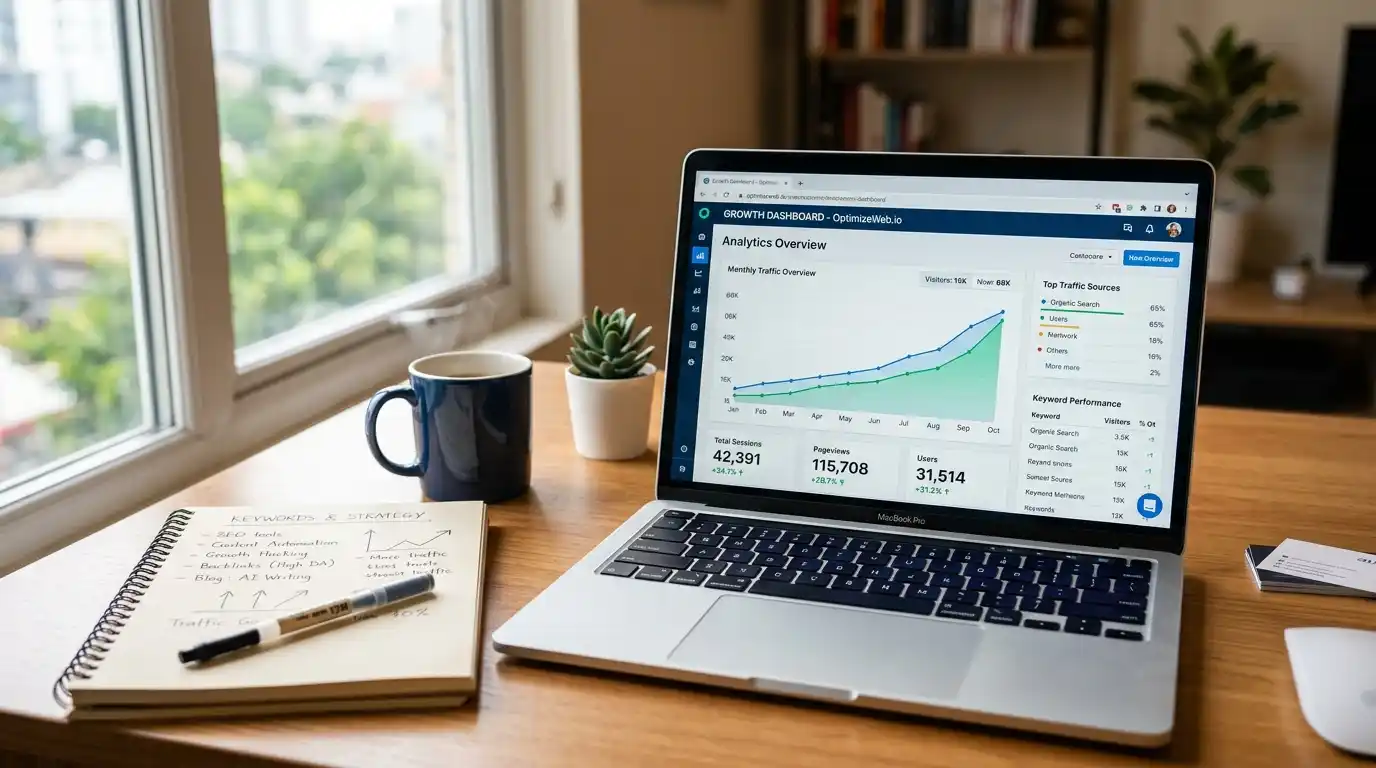
Search Engine Optimization: A Practical Guide to Long-Term Organic Growth
Search engine optimization helps your business show up when people actively look for answers, services, and products. It shapes how search engines read your pages, how visitors experience your site, and how often the right audience finds you through organic search. When done well, SEO builds trust, lifts visibility, and brings in traffic that keeps working long after a post goes live.
Start building a stronger search presence with expert SEO support and create a strategy that attracts the right visitors consistently.
What Search Engine Optimization Really Means
Search engine optimization is the process of improving a website so search engines can understand it and rank it for relevant searches. That sounds technical, but the idea is simple: create pages that answer real questions better than competing pages. Search engines reward clarity, relevance, usability, and authority.
SEO works best when you treat it as a full system, not a single tactic. Keywords matter, but so do content quality, page speed, internal links, mobile usability, and backlink strength. A site with great content but weak structure often struggles. A fast, well-organized site with helpful content usually performs better over time.
Strong SEO also supports brand credibility. When users see your site near the top of results, they often view your business as more established and trustworthy. That perception can influence clicks, leads, and sales before a visitor even reaches your homepage.
Why SEO Still Matters in a Competitive Market
Many businesses still depend on paid traffic alone, but organic traffic usually delivers better long-term value. Paid campaigns stop when budgets stop. SEO can continue generating visits, leads, and revenue for months or even years after you publish and optimize content.
SEO also helps you connect with people at different stages of the buying journey. Some visitors need basic information. Others compare solutions. A well-structured website can guide both groups with the right pages, internal links, and calls to action. That makes SEO useful for awareness, trust, and conversion.
Another major benefit is intent. People who search for a service often already want help. That means organic visitors can be highly qualified. They do not arrive by accident. They arrive with a need, a question, or a goal. Your job is to give them a clear path forward.
Start with Search Intent, Not Just Keywords
Good SEO begins with search intent. Before you write a page, ask what the searcher actually wants. Are they looking for information, a comparison, a local provider, or a service page? The same keyword can reflect different goals, so your content must match the real need behind the query.
Informational intent calls for guides, explanations, and how-to content. Commercial intent often needs service pages, feature pages, or solution-focused articles. Transactional intent calls for clear pricing, contact details, strong benefits, and trust signals. If your content misses the intent, it may get traffic without results.
Search intent also guides structure. A reader who wants a fast answer should see the main point early. A reader who wants to compare options should see subheadings, examples, and supporting details. When you match intent well, you improve engagement, reduce bounce risk, and increase the chance of ranking well.
Use Keyword Research to Guide the Content
Keyword research tells you how people search and what language they use. It helps you uncover primary keywords, secondary keywords, and long-tail keywords that reflect real demand. Instead of guessing, you can build content around terms that people actually type into search engines.
Start with the core topic, then expand into related phrases. For example, a page about search engine optimization may also include terms like organic traffic, on-page SEO, technical SEO, keyword strategy, content optimization, and link building. These phrases help search engines understand context and help readers recognize relevance.
Do not stuff keywords into every line. Use them naturally in headings, introductions, body copy, image alt text, and metadata. Search engines now value usefulness more than repetition. A page that reads naturally usually performs better than one that feels forced. Keyword research should guide the message, not overpower it.
Create Content That Answers Better Than Everyone Else
Content quality remains one of the strongest ranking signals because useful pages solve problems. Search engines want to surface pages that help users quickly and completely. That means your content should feel practical, current, and easy to follow.
To stand out, answer the main question early, then expand with examples, steps, and context. Avoid fluff. Readers value specific advice, clear explanations, and organized ideas. A strong page often includes definitions, checklists, common mistakes, and next steps. That structure improves readability and gives search engines more context.
You also need originality. Do not repeat the same sentence patterns or recycle the same claims across every section. Add fresh angles, real scenarios, and helpful detail. When your content sounds human and feels genuinely useful, it earns more trust from both readers and search engines.
Improve On-Page SEO with Clear Structure
On-page SEO helps search engines interpret your page correctly. It includes title tags, meta descriptions, headings, internal links, image alt text, and clean URLs. Each element gives search engines and users a better sense of what the page offers.
Use one clear main heading and organize the rest with descriptive subheadings. Keep paragraphs readable. Break complex ideas into smaller sections. Place your primary keyword where it fits naturally, especially in the title, first paragraph, one or two headings, and the conclusion. Then support it with related phrases throughout the article.
Strong on-page SEO also improves click-through rates. A page title that promises a clear benefit often earns more attention than a vague one. The same goes for meta descriptions. When your content feels precise and helpful before the click, more searchers choose your result.
Build a Website That Supports SEO from the Inside
Your website structure has a huge impact on visibility. Search engines need to crawl, understand, and index your pages efficiently. A messy site with confusing navigation can waste crawl attention and frustrate users. A clean structure makes every part of the site easier to discover.
Start with logical categories and a simple menu. Group related pages together. Use internal links to connect important articles and service pages. That helps users move naturally through your site and helps search engines understand which pages matter most. A strong internal linking plan can also pass value from one page to another.
Technical performance matters as well. Fast loading pages, mobile-friendly design, secure browsing, and clean code all support search visibility. When your site feels smooth, visitors stay longer, view more pages, and trust the experience more easily.
Give your website a clearer structure and better performance with smart web development that supports visibility, speed, and user experience.
Focus on User Experience to Strengthen Rankings
Search performance improves when visitors enjoy the experience on your site. Search engines can measure signals such as engagement, speed, and mobile friendliness. If people land on a page and leave quickly because it feels confusing or slow, that sends a weak signal.
Good user experience starts with clarity. Visitors should know where they are, what they can do next, and why the page matters. Use short, readable paragraphs. Add helpful headings. Keep forms simple. Make buttons easy to find. Remove clutter that distracts from the main goal.
Design also plays a role. A polished layout builds confidence. A page that looks clean and professional often feels more credible. That matters especially for service businesses, where trust influences contact decisions. Strong UX does not replace SEO, but it makes SEO work harder for you.
Strengthen trust with clearer page layouts and smoother journeys through better UI and UX that make every visit easier to navigate.
Use Internal Links to Guide Readers Naturally
Internal links help visitors move through your site with purpose. They also help search engines discover related content and understand topic relationships. When you place internal links thoughtfully, you create a stronger topical structure and a better user journey.
Link from broad pages to focused pages. Link from educational content to service pages. Link from one related article to another when the topics connect closely. This approach keeps visitors engaged longer and gives them more chances to take action. It also distributes authority across important pages.
Use descriptive anchor text instead of vague phrases. A link that says “learn more about keyword research” helps more than “click here.” Clear anchor text gives both readers and search engines useful context. Keep the links relevant, natural, and limited to the most helpful places.
Earn Authority Through Quality Backlinks
Backlinks remain important because they signal trust and relevance. When respected websites link to your content, they pass credibility and help search engines see your site as more authoritative. Not every backlink helps, though. Quality matters far more than quantity.
A strong backlink strategy focuses on relevance, editorial value, and consistency. You can earn links through useful guides, original insights, strong resources, and pages that people want to reference. Good content attracts links more easily than thin or generic content. That is why content quality and link building should work together.
Avoid shortcuts. Low-quality link schemes can do more harm than good. Instead, build relationships, publish helpful assets, and create pages worth citing. Over time, that approach supports stable rankings and a healthier domain profile.
Build stronger authority with a focused backlink strategy that supports trust, relevance, and long-term search growth.
Local SEO Helps Nearby Customers Find You
Local SEO matters when customers search for services in a specific location. It helps your business appear in map results, local packs, and location-based searches. For many service businesses, local visibility can drive highly qualified traffic with strong intent.
To improve local SEO, keep your business details consistent across your site and listings. Use location-based keywords where they fit naturally. Create helpful location pages when you serve multiple areas. Encourage reviews, because they support credibility and can influence click behavior.
Local content also helps. Write about local service needs, common customer questions, and location-specific concerns. When your site shows clear relevance to a nearby audience, search engines can match it more effectively to local intent.
Measure Results and Improve Over Time
SEO works best when you treat it as an ongoing process. Rankings can change. Search behavior can shift. Competitors can improve their pages. That is why regular review matters. You need to know what performs well and what needs refinement.
Track organic traffic, rankings, impressions, clicks, bounce patterns, conversions, and time on page. These signals help you see whether your content attracts the right audience and whether visitors take action. A page can rank well but still fail if it does not lead readers toward a useful next step.
Use the data to improve. Refresh outdated content. Expand thin sections. Strengthen weak headlines. Improve internal links. Update metadata. SEO grows through iteration, not guesswork. The more carefully you measure and adjust, the stronger your results become.
Common SEO Mistakes to Avoid
Many websites struggle because they focus on tactics without thinking about the whole experience. One common mistake is writing for search engines instead of people. Another is targeting too many keywords on one page. Both can weaken clarity and reduce impact.
Other mistakes include slow loading pages, weak mobile design, duplicate content, poor internal linking, and vague headlines. Some businesses also ignore conversion paths. They bring in traffic but give visitors no clear next step. That wastes the effort behind the ranking.
You can avoid most of these issues by staying focused on usefulness. Make each page serve one clear purpose. Keep the message simple. Write with purpose. Improve the site structure. Then keep testing and refining. Small improvements often produce meaningful gains over time.
Build SEO into the Full Growth Strategy
SEO works best when it connects with the rest of your marketing. Your content should support your service pages, your service pages should support your leads, and your site should make it easy for visitors to act. That creates a stronger flow from search visibility to business results.
Think beyond traffic. Ask what happens after someone lands on your site. Do they find useful answers? Do they trust the brand? Do they know what to do next? Those questions matter as much as rankings. A page that brings in visitors but fails to convert has not done its full job.
When SEO, content, design, and lead flow work together, the results become more durable. You build a system that attracts, informs, and converts. That is the real value of search optimization.
Conclusion
Search engine optimization rewards websites that stay clear, useful, fast, and trustworthy. It works when you align content with intent, structure pages carefully, and build authority step by step. You do not need tricks or shortcuts. You need a practical system that helps people find what they are looking for and gives them a strong reason to stay.
The best SEO strategies combine smart keyword research, helpful content, clean technical foundations, strong internal links, and a site experience that feels easy from the first click. When those pieces come together, organic traffic becomes a reliable growth channel rather than a guessing game.
Turn search traffic into steady business growth with a focused lead strategy that helps you capture more qualified opportunities from every visit.
FAQ
1. What is search engine optimization?
Search engine optimization is the process of improving a website so it ranks better in search results and attracts more organic traffic.
2. Why is SEO important for businesses?
SEO helps businesses reach people who already search for their products or services, which can lead to more qualified traffic and leads.
3. How long does SEO take to show results?
SEO usually takes time. Some improvements can appear in weeks, but stronger results often build over several months.
4. What are the main parts of SEO?
The main parts include keyword research, content optimization, on-page SEO, technical SEO, internal linking, and backlink building.
5. Is content still important for SEO?
Yes. Helpful, well-structured content remains one of the strongest ways to improve visibility and user trust.
6. Do backlinks still matter?
Yes. Quality backlinks still help search engines understand authority and relevance, especially in competitive topics.
7. What is local SEO?
Local SEO helps businesses appear in searches from nearby customers and improves visibility in location-based results.
8. How can I improve SEO without overcomplicating it?
Start with search intent, publish useful content, improve page speed, use clear headings, and build a strong internal linking structure.