

The modern internet shapes how billions of people live, work, and communicate every single day. Behind every digital storefront, sleek social platform, and informational blog lies a complex structure built by web developers. Web development forms the backbone of the digital world, turning creative concepts into interactive online realities. If you want to understand how the internet operates or wish to build your own digital assets, you must master the fundamental principles of web creation.
Every time you type a web address into your browser, you set off a sophisticated chain reaction. Code transforms text files into beautiful, functional interfaces on your screen. This comprehensive guide introduces you to the core elements of web development, unraveling the technology that powers your favorite websites.
Ready to master the craft? Read our comprehensive web developer guide to kickstart your coding journey today.
Decoding Web Development: The Core Building Blocks

Web development encompasses all the work required to build and maintain a website for the internet. This process runs the gamut from creating simple, single-paged plain text sites to building highly complex electronic businesses and social network applications. While people often use the terms web design and web development interchangeably, they mean different things. Web designers create the visual layout and user experience interfaces, while developers write the functional code that brings those visual designs to life.
To understand web development, you must first comprehend the classic client-server model. Think of the client as the user device, such as your laptop, smartphone, or tablet, running a web browser like Google Chrome or Mozilla Firefox. The server, on the other hand, is a powerful remote computer that stores all the website files, databases, and assets.
When you request a webpage, your browser acts as the client and sends a request over the internet to the server. The server processes this request, locates the correct files, and sends them back to your browser. Your browser then reads and interprets these files, rendering them into the visual page you interact with.
To make this system work smoothly, developers rely on the Domain Name System, or DNS. The DNS operates like the phonebook of the internet, translating human-readable website names into numerical IP addresses. Without DNS, you would have to memorize long strings of numbers just to visit your favorite online destinations. Clean, well-structured code ensures that this entire communication cycle happens within fractions of a second, providing a seamless browsing experience.
Frontend vs. Backend vs. Full-Stack Development
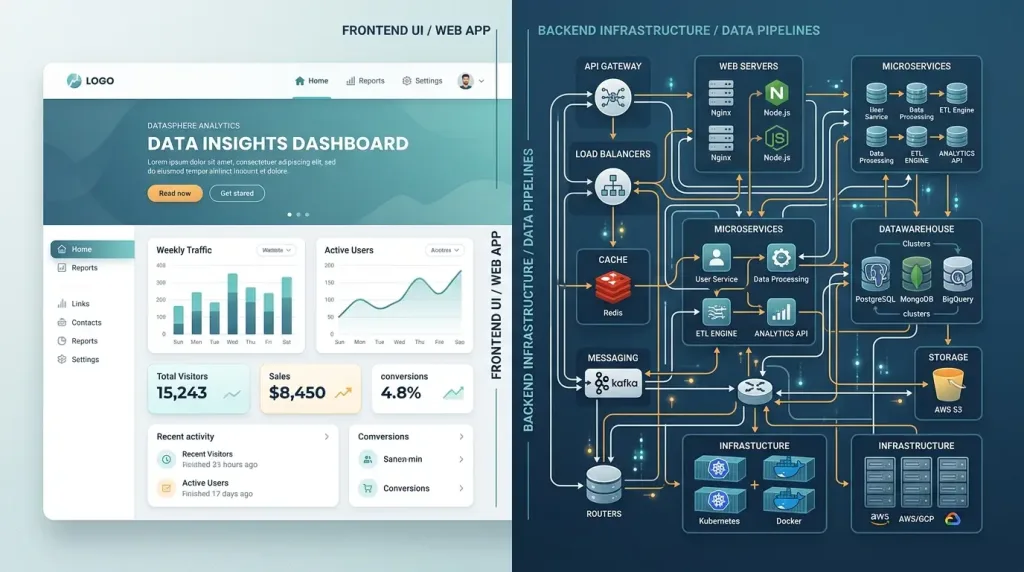
The web development landscape splits into three primary concentrations: frontend, backend, and full-stack development. Each concentration requires unique skills, utilizes distinct tools, and solves specific problems within the ecosystem of a website.
Frontend development focuses entirely on the user-facing side of a website. Frontend developers build everything that a user sees, clicks, touches, or interacts with directly. They ensure that text looks legible, layouts adapt smoothly to mobile screens, buttons trigger the correct actions, and animations run fluidly. The frontend acts as the direct bridge between the human user and the digital application, demanding a balance of technical coding skills and spatial design awareness.
Backend development handles the behind-the-scenes mechanics that users never see but rely on constantly. The backend consists of the server, the application core, and the underlying databases. When you buy a product online, log into an account, or search for a specific article, the backend processes that data. Backend developers build the logical architecture, create secure user authentication systems, manage database storage, and write the scripts that process complex information requests.
Full-stack development bridges both worlds seamlessly. A full-stack developer possesses the skills and knowledge to build both the frontend user interfaces and the backend database systems. These versatile professionals understand the entire lifecycle of web applications, allowing them to oversee projects from conception to completion. Businesses highly value full-stack developers because they can troubleshoot problems across any layer of the technical stack.
The Essential Tech Stack for Beginners
Every aspiring web developer must start with three fundamental languages: HTML, CSS, and JavaScript. These three technologies form the undisputed foundation of the modern web, and every browser natively understands them.
HTML: Building the Structure
HyperText Markup Language (HTML) provides the raw structure of any webpage. Think of HTML as the skeleton of a building. It defines where headings go, outlines paragraphs, creates lists, embeds images, and establishes hyperlinks. HTML uses a system of tags to label different types of content, ensuring that the browser understands the purpose of each element on the page. Modern developers use semantic HTML elements, following the official specifications maintained by the World Wide Web Consortium (W3C), to improve accessibility and help search engines better understand page content.
CSS: Creating the Visual Design
Cascading Style Sheets (CSS) control the presentation and appearance of a webpage. If HTML is the skeleton of a building, CSS represents the paint, wallpaper, windows, and interior décor. Developers use CSS to define colors, choose fonts, create layouts, and manage spacing. Modern CSS features such as Flexbox and CSS Grid make responsive design possible, allowing websites to adapt seamlessly to smartphones, tablets, laptops, and desktop monitors.
JavaScript: Adding Interactivity
JavaScript introduces interactivity, logic, and dynamic behavior to websites. It functions like the plumbing, electrical wiring, and automation systems in a building. While HTML and CSS create a static page, JavaScript brings it to life by powering drop-down menus, validating forms in real time, updating content without page reloads, and creating animations. Developers can deepen their knowledge through the extensive documentation provided by the Mozilla Developer Network (MDN).
Learning Git and GitHub
Beyond the three core languages, beginners should also learn version control with Git and platforms like GitHub. Git records every change made to a project’s source code, making it easy to restore earlier versions if something goes wrong. GitHub stores repositories in the cloud, simplifies collaboration, tracks project history, and enables developers to contribute to open-source projects while working efficiently with teams.
The Web Development Lifecycle
The Website Development Lifecycle
Building a successful website requires a systematic, step-by-step process. Skipping stages or rushing into the coding phase without a clear plan often leads to technical debt, bloated budgets, and missed deadlines.
Planning and Discovery
The lifecycle begins with the planning and discovery phase. Developers and stakeholders define the purpose of the website, identify the target audience, and outline the necessary features. During this stage, creators establish a clear site map, which outlines the hierarchy of pages and shapes the overall user navigation flow.
Design and Wireframing
Next comes the design and wireframing phase. Designers create low-fidelity wireframes to plan layout structures without getting distracted by colors or typography. Once approved, these wireframes evolve into high-fidelity prototypes using tools like Figma. These prototypes simulate the look and feel of the final product, allowing teams to test user journeys before anyone writes a single line of production code.
Coding and Implementation
The coding and implementation phase follows the design approval. Developers step in to set up the environment, configure version control repositories, and write clean frontend and backend code. They transform static design mockups into functional, interactive webpages, building out features layer by layer according to the project specifications.
Testing and Quality Assurance
Once the code matches the design, the project enters the rigorous testing and quality assurance phase. Developers test the website across multiple browsers, operating systems, and physical devices to ensure consistent behavior. They check for broken links, fix layout errors, test form submissions, and eliminate security vulnerabilities to protect user data.
Deployment and Launch
After thorough testing, the deployment phase begins. Developers upload the verified website files to a hosting provider or cloud platform, making the site accessible to the public internet. The launch marks a huge milestone, but the work does not end there.
Maintenance and Continuous Improvement
The final phase involves continuous maintenance, where developers monitor performance, update software libraries, patch security flaws, and refine features based on real user feedback.
Want to ensure your website ranks high? Learn how to master search visibility with our complete Google SERP analysis guide.
Modern Trends and Best Practices in Web Development

The web development world evolves at a lightning-fast pace. To build software that remains relevant, reliable, and competitive, you must embrace modern best practices and industry standards.
First and foremost, prioritize website performance and loading speeds. Modern users expect pages to load almost instantly, and delayed load times cause visitors to abandon your site. Developers optimize performance by compressing large image files, minifying code files to remove unnecessary spaces, caching assets strategically, and utilizing fast content delivery networks. Fast websites keep users engaged, reduce bounce rates, and improve overall customer satisfaction metrics.
Second, adopt a strict mobile-first design philosophy. Mobile devices now drive more than half of all global internet traffic. Instead of designing a website for a desktop computer and attempting to shrink it down, modern developers build the layout for small smartphone screens first. They then layer on styles and expand the layout progressively for larger tablet and desktop screens, ensuring a flawless user experience across all devices.
Third, commit to web accessibility, often abbreviated as digital accessibility or a11y. Accessibility ensures that everyone, including people with visual, auditory, motor, or cognitive disabilities, can navigate and interact with your website. Use semantic HTML tags, provide descriptive alternative text for all images, ensure high color contrast for readability, and design keyboard-friendly navigation options so users do not rely solely on a mouse.
Finally, embed robust security measures into every layer of your application. Implement Hypertext Transfer Protocol Secure encryption across your entire domain to protect sensitive communication between the client and the server. Keep your software dependencies, libraries, and frameworks updated to patch known vulnerabilities. Validate and sanitize all user input fields to prevent malicious data injection attacks from compromising your database systems.
Translating Code into Search Visibility
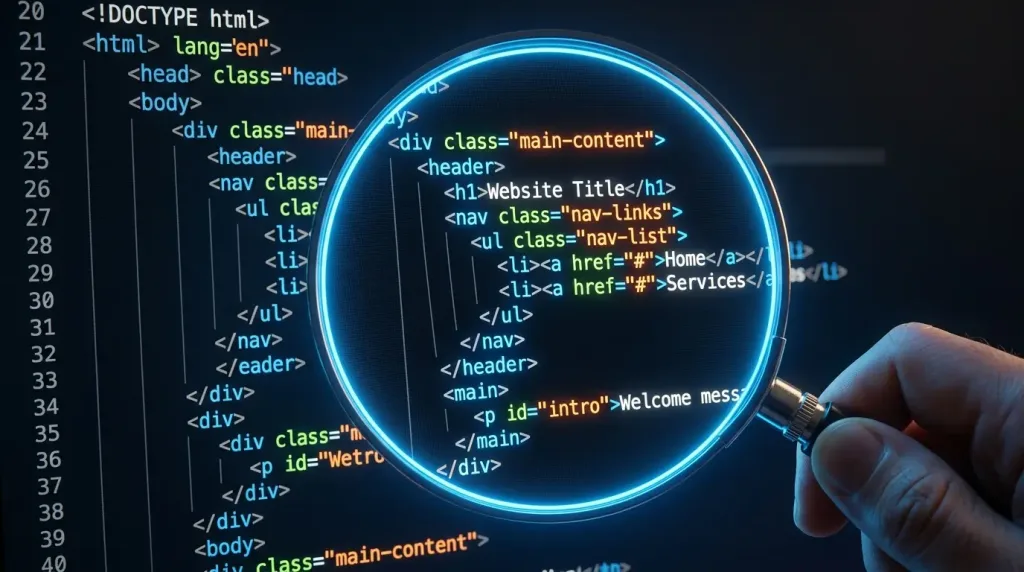
The quality of your underlying source code directly influences how effectively search engine spiders can discover, crawl, and index your content. Search engines utilize automated bots to read the code of your website, trying to understand the topic, structure, and value of your pages. If your code resembles a disorganized tangle of tags, search engines will struggle to process your site, which harms your visibility.
Clean, lean code speeds up server response times and minimizes file sizes. Search engine algorithms openly reward fast-loading websites because they provide a superior experience for human searchers. By prioritizing page speed and performance optimization during the development phase, you build a strong foundation for your broader digital marketing strategies.
Furthermore, semantic markup gives clear context to your text. Using proper heading hierarchies helps search crawlers understand the primary themes of your content. When you blend technical development expertise with high-quality content production, you build digital assets that stand out in competitive online spaces.
Conclusion
Web development represents a dynamic, rewarding discipline that merges logic, creativity, and technical problem-solving. By understanding how clients and servers interact, mastering the core languages of HTML, CSS, and JavaScript, and following a structured development lifecycle, you can build powerful websites that captivate audiences worldwide. As you embark on your coding journey, focus on writing clean code, designing for mobile users, and optimizing for performance. Continuous practice and persistent curiosity will help you unlock the full potential of the modern web.
Transform your new web traffic into real revenue. Read our guide on BANT lead generation to qualify high-value prospects easily.
Frequently Asked Questions
What is the difference between frontend and backend web development?
Frontend development focuses on the visible parts of a website that users see and interact with directly, using HTML, CSS, and JavaScript. Backend development manages the hidden server-side logic, databases, and application data processing that power the frontend.
How long does it take to learn basic web development?
Most dedicated beginners can grasp the fundamentals of HTML, CSS, and basic JavaScript within three to six months of consistent practice. Mastering advanced backend frameworks, complex databases, and systems architecture generally requires several additional months or years of practical experience.
Why is responsive web design so important for modern sites?
Responsive web design ensures that your website automatically adjusts its layout, font sizes, and image dimensions to look excellent on any screen size. Because mobile devices generate a massive portion of global web traffic, responsive design is vital for retaining visitors.
Do I need a formal university degree to become a web developer?
No, you do not need a formal computer science degree to build a successful career in web development. Many professional developers are entirely self-taught or graduated from practical coding boot camps, relying instead on strong portfolios of real-world projects to prove their skills.
What does a version control system like Git actually do?
Git tracks and logs every modification made to your project files over time, creating an organized history of your code. It allows you to experiment safely, roll back to working versions if errors occur, and collaborate with multiple developers simultaneously without overwriting data.
Keep reading
All articles
The Ultimate Guide to Web Development: What a Web Developer Does and Why It Matters
The digital universe expands every single second. Millions of people open web browsers daily to buy products, stream videos, learn new skills,…
Read article
Web Developer Salary: Complete Guide & Industry Trends
Introduction: The Modern Web Developer Salary Landscape The tech industry continues to evolve rapidly, and web developers stand at the forefront of…
Read article
Choosing a Web Design and Development Agency That Delivers Real Results
Your website serves as your business’s digital front door, and the right design can significantly influence how people experience your brand. When…
Read article