

Every day, billions of users type search queries into Google, expecting instant, precise solutions to their problems. For digital marketers and business owners, those search queries represent the ultimate battleground for visibility. Historically, professionals believed that simply stuffing target keywords into articles would guarantee a first-page position. Today, search algorithms use advanced machine learning systems to evaluate content depth, layout, and contextual relevance. If you want to outrank your competitors, you must look beyond your own content and meticulously study the actual search results page. This process is known as a Search Engine Results Page (SERP) analysis.
A SERP analysis involves evaluating the top-ranking pages for a specific keyword to understand competitor strategies, user search intent, and ranking difficulties. By dissecting the search layout, you discover exactly what Google values for a specific query. You uncover the exact formatting styles, content structures, and authoritative signals required to secure a top position. This analytical process removes the guesswork from search engine optimization, saving your team months of wasted content creation effort.
Need higher search rankings? Boost your organic visibility and outsmart competitors by checking out our comprehensive SEO services.
The Evolutionary Shift from Keywords to Search Intent

Deconstructing the Modern Searcher’s Psychology
Search engines no longer rely on simple word-matching mechanics to rank content. Instead, modern search ecosystems utilize complex algorithmic models like Bidirectional Encoder Representations from Transformers (BERT), a machine learning framework that helps Google understand the context of words in a search query. These systems allow the algorithm to decode the true meaning behind a user’s search, shifting the focus from raw keywords to search intent.
Search intent represents the primary goal a user hopes to accomplish when entering a query into Google. Understanding this intent is essential because Google aims to deliver results that best satisfy the user’s needs rather than simply matching keywords.
Why Search Intent Matters
When you conduct a thorough SERP analysis, one of your first objectives is to identify how Google interprets the intent behind a target keyword. The search results themselves reveal Google’s expectations. By examining the top-ranking pages, you can determine the type of content that users and Google’s algorithm consider most valuable.
Search engines generally classify user intent into four primary categories, each requiring a different content strategy.
Informational Intent
The user seeks knowledge, answers, or detailed explanations. Searches such as “how does photosynthesis work” or “what is SERP analysis” typically return comprehensive guides, educational articles, tutorials, and encyclopedia-style resources.
Navigational Intent
The searcher wants to reach a specific website or brand. Examples include “Facebook login” or “Moz tools.” Unless you own or officially represent the brand, competing for these keywords is usually unrealistic.
Commercial Investigation
Users are researching before making a purchase. Queries like “best CRM software for small business” often generate comparison articles, review websites, buying guides, and product roundups that help users evaluate different options.
Transactional Intent
The searcher is ready to complete a purchase or request a service. Searches such as “buy running shoes online” or “order custom web design” commonly display product pages, service landing pages, pricing pages, and checkout experiences.
Matching Content to Search Intent
If your SERP analysis reveals that Google’s first page is dominated by transactional product or service pages, publishing an informational blog post is unlikely to achieve strong rankings, regardless of its quality. Successful SEO depends on matching your content format to the intent Google has already identified for that query.
Google’s Search documentation consistently emphasizes that satisfying the searcher’s needs is one of the core principles behind organic rankings. Aligning your content with user intent dramatically improves your chances of earning visibility in modern search results.
The Core Elements of a Search Engine Results Page
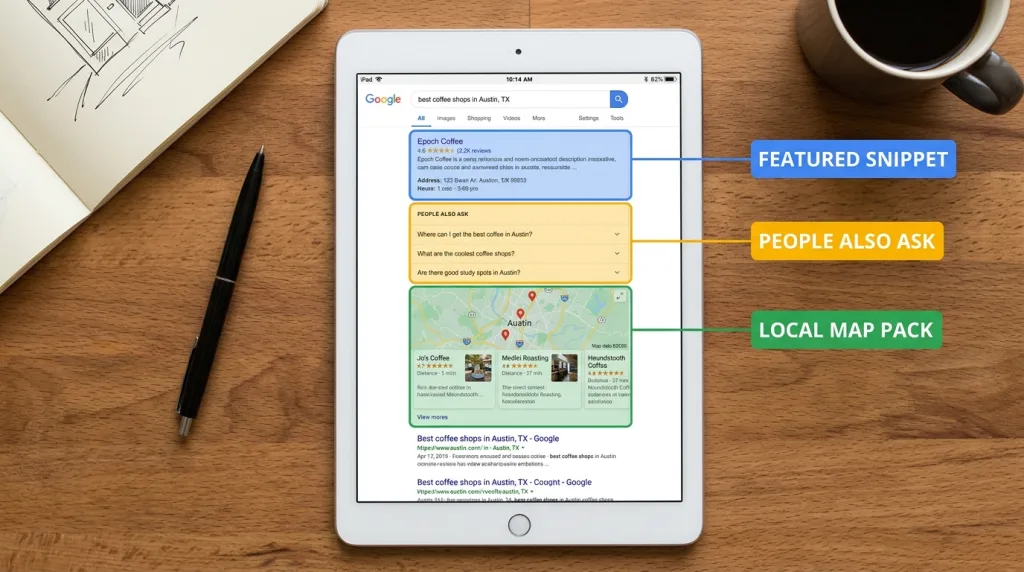
Beyond Blue Links: Decoding Modern Rich Results
The modern search layout contains a diverse mixture of interactive features, visual formats, and zero-click answer boxes. Understanding these individual SERP features allows you to predict your actual organic click-through rate (CTR the percentage of searchers who click your link out of total views). If a results page features heavy advertising and multiple interactive modules, the traditional organic listings get pushed down the page, lowering the potential traffic yield.
When analyzing a target SERP, you must identify the key features that shape user behavior and influence organic visibility.
Featured Snippets
Featured snippets appear at the top of the organic search results, displaying a direct answer extracted from a ranking page. They commonly take the form of paragraphs, bulleted lists, tables, or numbered steps. Securing a featured snippet can place your content above the first organic listing, often increasing visibility and click-through rates.
People Also Ask (PAA) Boxes
The People Also Ask (PAA) section contains expandable questions related to the user’s original search. Each question reveals a concise answer along with a link to the source page. Reviewing these questions helps you discover the related topics and common concerns your audience expects you to address. Including these answers in your content improves topical coverage and increases your chances of appearing in PAA results.
The Local Pack (Map Pack)
For searches with local intent, such as “web developer near me,” Google often displays a map with three prominent business listings. This Local Pack occupies significant screen space, especially on mobile devices, and frequently attracts more attention than standard organic results. Businesses targeting local customers should prioritize optimizing their business profiles and local SEO signals.
Knowledge Panels
Knowledge Panels appear on the right side of desktop search results or prominently on mobile devices for recognized entities such as businesses, organizations, places, and public figures. They present verified information gathered from trusted sources, helping users find quick facts without leaving the search page. Maintaining accurate business information and building authority can improve the likelihood of appearing in these panels.
Evaluating how these elements alter user engagement is critical when planning a dual search and conversion strategy. For instance, studying the differences between maximizing raw search views versus optimizing for on-site conversions helps you allocate your marketing budget efficiently. You can explore this relationship further by reviewing our deep dive into balancing search acquisition and on-page conversion strategies on our page about SEO vs CRO.
Step-by-Step Guide to Conducting a Manual SERP Analysis

The Raw Data Method: Analyzing Google Without Third-Party Software
While premium SEO platforms streamline data gathering, performing a manual inspection of a search results page yields deep qualitative insights that software often misses. A manual analysis helps you see exactly what a live user experiences, allowing you to observe the visual nuance of your competitors’ presentations.
Follow this strict procedural sequence to execute a flawless manual SERP analysis:
1.Strip Away Personalization Biases: Prerequisite Setup.Open a clean Incognito or Private browsing window before executing any search. Standard browser sessions store your historical cookies, search histories, and localized account preferences, which skew the search results. If you target a different geographical region, utilize a trusted localized search simulator tool to view the page exactly as a local resident would.
2.Categorize the Intent Layout: First Analysis Pass.Input your target keyword into the search bar and hit enter. Do not look at the individual websites yet; instead, scan the entire page layout. Note whether Google fills the top view with video carousels, shopping product carousels, or traditional text blocks. If video carousels dominate the top fold, your strategy must include video production alongside text creation.
3.Deconstruct the Top Three Organic Competitors: Deep Competitive Review. Click on the first three non-advertised websites ranking on the page. Analyze their content delivery style thoroughly. Document their total word counts, the complexity of their language, their structural use of headings, and the types of media they embed. Identify whether they use interactive tools, step-by-step imagery, or raw academic text.
4.Harvest Latent Semantics from PAA Modules: Subtopic Extraction. Return to the SERP and look closely at the “People Also Ask” section. Click on three to four of the questions to expand them, which forces Google to populate even more related queries at the bottom of the module. Write these exact questions down. Your future article must answer these queries directly within its secondary subheadings to satisfy Google’s contextual expectations.
Want to build elite domain authority? Acquire high-quality, authoritative assets naturally with our targeted SEO backlink building services.
Scaling with Enterprise Analytics & Metric Assessment

Decoding Quantitative Data: Difficulty, Volume, and Authority
Manual analysis provides an exceptional qualitative baseline, but scaling an organic search strategy across hundreds of target keywords requires quantitative validation. Enterprise marketing platforms allow teams to gather aggregated metrics instantly, converting visual observations into hard statistical projections. When processing large batches of keywords, you must look at specific structural metrics to evaluate your realistic chances of ranking.
The most critical numbers to track during your software-assisted SERP analysis include:
- Keyword Difficulty (KD): This metric uses a scale from 1 to 100 to calculate how hard it will be to break into the top ten organic spots. Software engines calculate this number by analyzing the link profiles of the pages currently holding those top positions. High difficulty scores tell you that you will need extensive link building and time to compete.
- Domain Authority or Domain Rating (DA/DR): Developed by data science teams at major SEO platforms, this metric predicts how well an entire website will rank in search engines based on its total backlink equity. If every site occupying the top five slots possesses a Domain Authority above 80, a brand-new website with a score of 15 will struggle to outrank them in the short term, regardless of content optimization.
- Search Volume: This figure estimates how many times users search for that exact query within a specific calendar month. Always weigh volume against difficulty; a keyword with lower search volume but zero difficulty often yields immediate revenue faster than a massive term you cannot rank for.
By organizing these numbers into an internal tracker, you quickly discover profitable clearings in the market. You can read deeper analytical breakdowns regarding competitive difficulty ratings on the official Moz Learn Portal, which offers historical reference data on how authority scores correlate with top-tier rankings over time.
Advanced Strategies: How to Steal Competitor Real Estate
Content Gap Engineering and Snippet Optimization
Once you map the competitive layout and gather your metrics, you must engineer a piece of content that physically outperforms the current ranking pages. To achieve this, use a technique called content gap engineering. This involves finding omissions, outdated facts, or surface-level explanations within the top-ranking sites and building an asset that fixes those flaws.
To systematically capture premium real estate on the SERP, apply these advanced optimization workflows:
- Target the Featured Snippet Layout: Look closely at the current featured snippet. If Google displays a numbered list snippet, structure your main solution using clear, sequential headings or a clean Markdown list. If it displays a paragraph snippet, place a concise, 45-word definition directly beneath your primary
<h2>heading. - Deploy Validated Schema Markup: Search engines struggle less to read your content when you provide clear metadata flags. Schema markup represents structured data code that you add to your website files. This code explicitly tells search bots what your content represents, whether it is an article, a local business address, a video explanation, or an FAQ block.
- Incorporate Comprehensive Primary Data: Modern search engines heavily reward original studies, custom charts, and unique brand insights. If your competitors merely copy and paste information from each other, publish primary data or real-world case studies to position your site as a primary source that others will reference.
Ready to turn search traffic into scalable revenue? Fuel your sales pipeline continuously using our data-driven lead generation solutions.
Generative Engine Optimization (GEO): The Next Frontier of Search

Preparing for AI-Powered Overviews and Generative Search The search architecture is shifting rapidly from standard search listings to generative, AI-synthesized responses. With the integration of Google’s AI Overviews and alternative conversational answer platforms, the traditional method of analyzing blue links is no longer sufficient. Generative Engine Optimization (GEO) involves optimizing your web assets so that artificial intelligence models select, cite, and recommend your content within their automated text summaries.
To maintain visibility within generative search engines, your optimization strategy must evolve to address these core AI retrieval behaviors:
- Maximized Information Density: Generative engines bypass filler words and fluff. They scan documents for hard facts, statistical percentages, and clear causal relationships. Ensure every paragraph delivers specific data points that an AI can easily extract and rephrase.
- Authoritative Inline Citations: AI search systems prioritize content that links out to verified research, academic papers, and established foundational standards. Referencing authoritative frameworks or technical specifications like the official web structure definitions tracked by the W3C Standards Organization enhances your contextual trustworthiness.
- Conversational Q&A Alignment: Generative models answer questions using a natural, human-like voice. Design your content to mirror this structure. Frame your headers as clear questions and begin your body paragraphs with direct, declarative answers using active verbs.
Designing a Repeatable Search Framework
Integrating Insights into Corporate Workflow PipelinesA SERP analysis is not a one-time project that you complete and forget; it represents a continuous cycle that your marketing team must execute before publishing any page. Because search engine algorithms update constantly, the visual elements and competitor strategies on a search page can shift in a matter of weeks. Establishing a repeatable internal tracking framework ensures your content retains its rankings over the long term.
Build an internal workflow that forces your writers to log their findings before entering the drafting phase. Create centralized tracking sheets that record keyword metrics, intent classifications, required rich features, and the average word counts of your top competitors. This structured preparation protects your production budget from being spent on content that has no chance of ranking due to domain mismatch or misaligned intent.
Frequently Asked Questions
What is the difference between a keyword analysis and a SERP analysis?
A keyword analysis focuses primarily on identifying words, discovering monthly search volumes, and collecting broad metric estimates across historical software databases. A SERP analysis goes much deeper by investigating the live, real-time results page for those specific terms. It examines active competitor structures, identifies rich interactive features, and uncovers the exact search intent that the algorithm currently rewards.
How often should my team re-analyze our target search result pages?
You should conduct a fresh analysis before creating any new piece of content, and you should review your high-priority target pages quarterly. Competitors constantly publish new updates, and search engines regularly introduce fresh interactive features or algorithm changes that can completely alter the organic layout of a page.
Can a brand-new website rank for keywords with high difficulty scores?
A brand-new website will find it incredibly difficult to rank for high-difficulty keywords in the short term because it lacks established backlink authority. New brands should focus on targeting low-difficulty, long-tail search terms first. Winning these smaller search positions allows a site to naturally build up its domain authority over time.
Why does my manual search analysis look different from my automated software report?
Manual searches vary because Google personalizes results based on your physical location, past browsing history, device type, and active browser cookies. Software platforms remove these personal biases by scraping data through clean, neutral servers. For the most accurate strategy, use software numbers for your high-level overview and manual incognito checks for qualitative insights.
What are zero-click searches, and how do they affect my content metrics?
A zero-click search occurs when a user finds their answer directly within a featured snippet, local map pack, or information panel without clicking any of the website links. While zero-click searches can lower your traditional website traffic metrics, winning these top-level features still builds excellent brand authority and keeps your company top-of-mind for consumers.
Does adding schema markup guarantee my site will win a featured snippet?
No, adding schema markup does not guarantee a featured snippet, but it makes it much easier for search engines to crawl, understand, and display your content. Think of schema markup as structured labeling that highlights your data, increasing the odds that an algorithm will select your asset for rich results.
Keep reading
All articles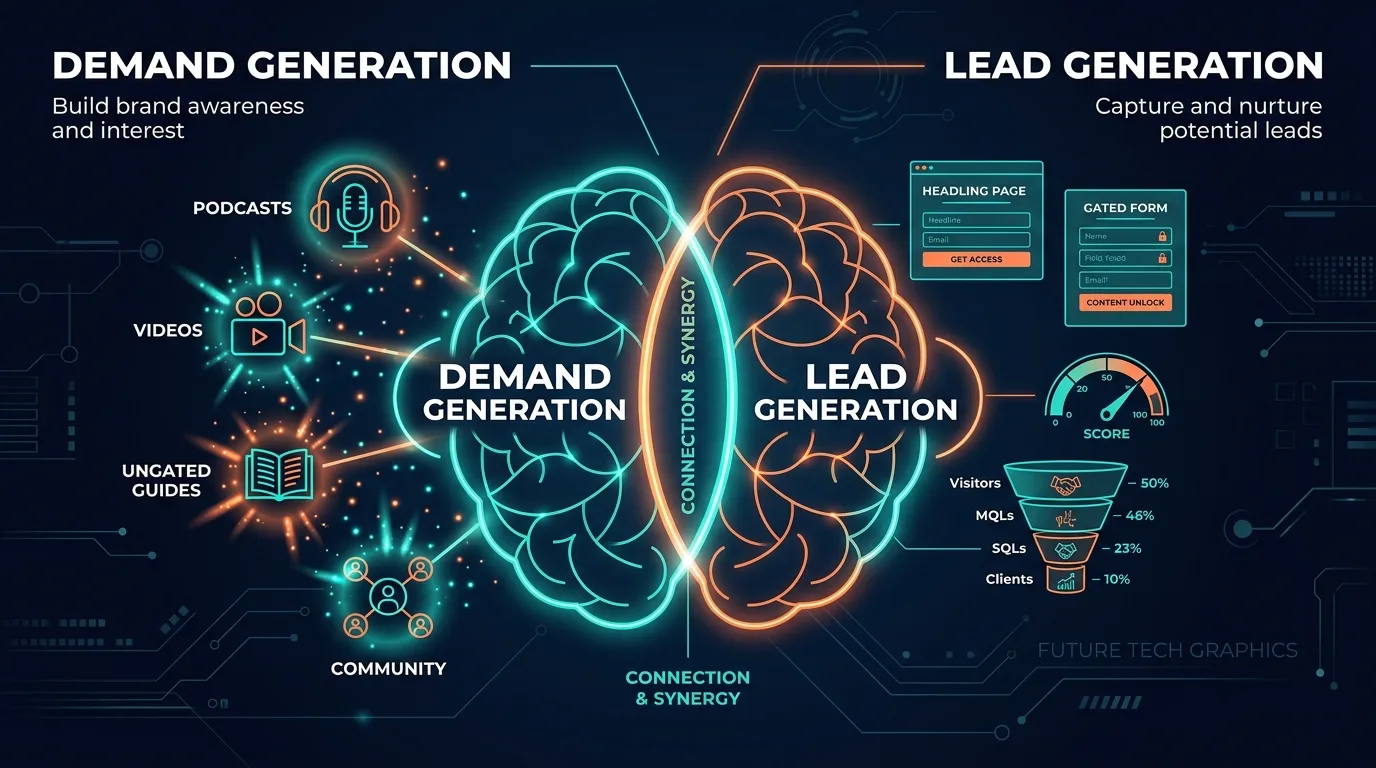
Demand Generation vs. Lead Generation: What’s the Difference?
You pour thousands into marketing campaigns. Your team generates hundreds of leads every month. But when you check the sales pipeline, almost…
Read article
Proven Backlink Strategies to Boost Your SEO Rankings Fast
Modern search engines continuously evolve, yet one fundamental truth remains unchanged: high-quality backlinks serve as the backbone of online authority. When reputable…
Read article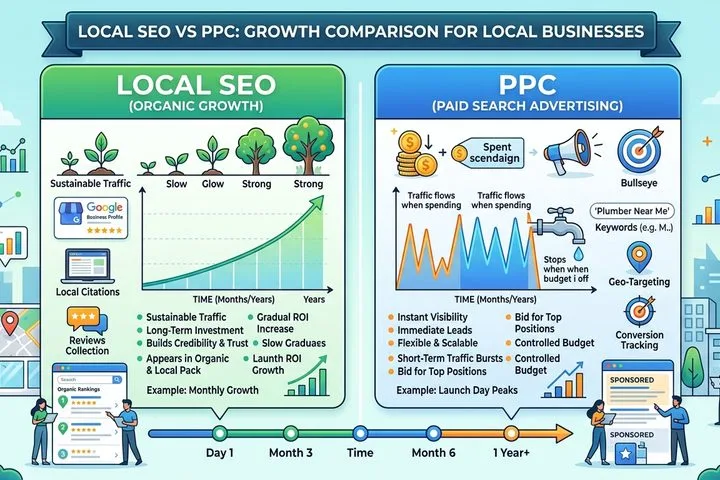
Local SEO vs Paid Search: Best Choice
Every local business owner faces this exact dilemma. You open your laptop, stare at the search results, and wonder: should I invest…
Read article