Every time you scroll through social media, check your email, or search for something on Google, you encounter digital marketing. It’s the engine that powers how businesses connect with you online. And in 2026, this engine runs hotter than ever.
Global digital ad spending will reach $786.2 billion by the end of this year, growing at a remarkable 13–14% annual rate. That growth easily outpaces traditional advertising. But what exactly is digital marketing? Why should business owners care so much? And how can you use it effectively without drowning in complexity?
In this guide, I will walk you through everything you need to know. You will learn the core concepts, explore each major channel, discover the latest 2026 trends, and leave with actionable tips you can start using today. No fluff, no jargon—just clear, practical insights.
Ready to build a digital marketing strategy that actually drives results? Explore our full range of digital marketing services to see how we help businesses grow online.
What Is Digital Marketing? A Clear Definition
Digital marketing means promoting products, services, or brands using digital channels, devices, and technologies. Think of any marketing activity that appears on a computer, smartphone, tablet, or smart TV. If it happens online, it’s digital marketing.
This broad definition includes everything from a Google search ad to an Instagram story, from a promotional email to a YouTube tutorial. The core idea stays simple: reach your audience where they already spend their time—online.
Consider this: In the United States, nine out of ten adults go online daily, and four in ten say they are online "almost constantly" (Pew Research Center). Those numbers alone explain why businesses cannot afford to ignore digital channels. If your customers live online, your marketing must live there too.
Digital Marketing vs. Traditional Marketing
Traditional marketing uses offline channels like billboards, TV commercials, radio ads, direct mail, and print magazine advertisements. These methods still work for certain audiences, but they come with major limitations.
-
Traditional marketing typically reaches broad, less targeted audiences. You cannot easily track who saw your billboard or which specific customer responded to your TV ad.
-
Digital marketing allows precise targeting, real-time performance tracking, and direct interaction with customers. You can see exactly how many people clicked your ad, opened your email, or watched your video.
Digital Marketing vs. Inbound Marketing
Many people confuse these two terms, but they are not identical.
-
Digital marketing focuses on using specific online tools and channels (like PPC ads or social media) to reach and convert prospects.
-
Inbound marketing takes a broader, more holistic approach. It prioritizes the goal first—attracting customers through valuable content and experiences—and then selects the best tools to achieve that goal.
Think of inbound marketing as a philosophy and digital marketing as a toolbox. You can use digital tools to execute an inbound strategy, but digital marketing also includes outbound tactics like display ads.
Why Digital Marketing Matters More Than Ever in 2026
Digital marketing offers unique advantages that traditional methods simply cannot match. Here is why businesses invest more heavily in digital channels every year.
1. Broad Geographic Reach
A small local bakery can reach customers across the entire city. An online clothing store can sell to buyers in multiple countries. Digital marketing removes geographical barriers entirely.
2. Cost Efficiency
Small businesses with limited budgets can compete with larger companies using targeted digital campaigns. You do not need millions of dollars to run effective Facebook ads or rank for specific search terms.
3. Measurable Results
Every click, view, like, share, and purchase can be tracked and measured. You will know exactly which campaigns drive results and which ones need improvement.
4. Precise Targeting
Show your ads only to people who match your ideal customer profile. Target by age, location, interests, online behavior, purchase history, and dozens of other criteria.
5. Personalization at Scale
Deliver different content, offers, and messages to different audience segments automatically. Digital marketing tools make mass personalization possible without manual effort.
6. Real-Time Optimization
Notice an ad underperforming halfway through its run? Pause it immediately and reallocate your budget to better-performing creatives. Traditional marketing does not offer that flexibility.
According to recent data from HubSpot, sixty percent of small businesses plan to increase their marketing spend in 2026, with 78% of marketers feeling optimistic about the year ahead. Marketers prioritize investments in content marketing and SEO (45%), digital advertising (43%), and branding and creative development (41%). These numbers confirm that digital marketing is not just growing—it is becoming the central focus of most marketing strategies.
The 6 Core Digital Marketing Channels (Explained Simply)
Digital marketing combines multiple channels, each with its own strengths, tactics, and best practices. Understanding these channels helps you build a balanced, effective strategy.
1. Search Engine Optimization (SEO)
SEO optimizes your website to appear higher in organic (unpaid) search engine results. When someone searches for "best coffee shop near me" or "how to fix a leaky faucet," SEO determines whether your website shows up on the first page or page ten.
Key SEO activities include:
-
Researching the words and phrases your customers actually type into search engines
-
Creating content that answers those questions clearly and thoroughly
-
Optimizing technical elements like page speed, mobile responsiveness, and site structure
-
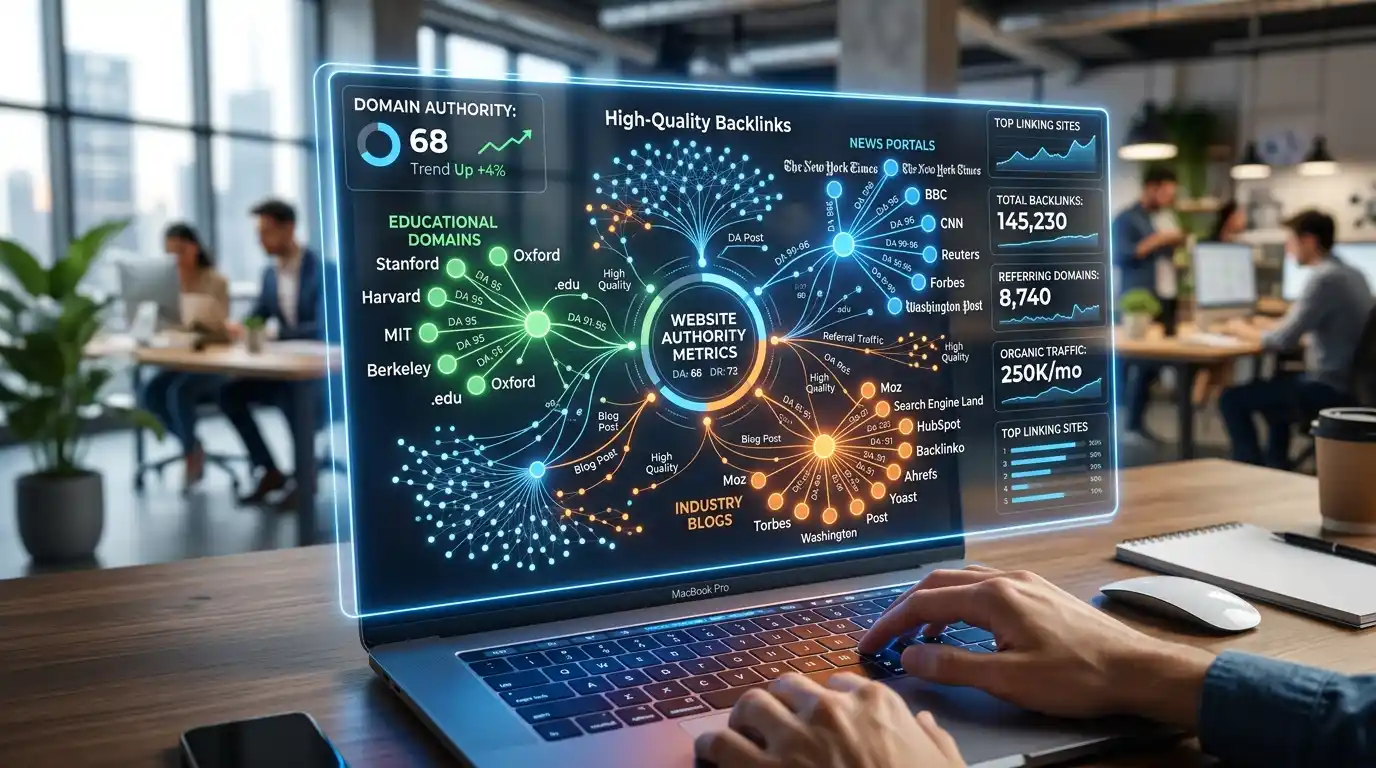
Building high-quality backlinks from reputable websites
-
Using structured data (schema markup) to help search engines understand your content
In 2026, SEO requires more than just keyword stuffing. Search engines now use AI to interpret content and surface direct answers. You need to create "AI-ready content" that provides clear, structured answers to customer questions. For a deeper dive, read Google’s Search Central guide on structured data.
Want to rank higher on Google and drive consistent organic traffic? Check out our SEO services to see how we improve search visibility for businesses like yours.
2. Content Marketing
Content marketing creates and shares valuable, relevant content to attract and retain a clearly defined audience. The goal is not to sell directly but to educate, inform, or entertain—building trust that eventually leads to sales.
Common content formats include:
-
Blog posts and articles
-
Videos and tutorials
-
Podcasts
-
Infographics and visual guides
-
Ebooks and white papers
-
Case studies and customer stories
High-quality content establishes your brand as an authority. When potential customers have questions, your content provides the answers. When they finally decide to buy, they remember you as the helpful expert.
In 2026, content marketing shifts toward "zero-visit visibility." Many users now get answers directly from AI overviews without clicking through to websites. Your content must be structured so AI tools can surface your information even when users do not visit your site. The Content Marketing Institute explains this trend in detail.
3. Social Media Marketing
Social media marketing uses platforms like Facebook, Instagram, TikTok, LinkedIn, X (Twitter), and Pinterest to connect with your audience, build brand awareness, and drive traffic or sales.
Today, there are 5.24 billion social media users worldwide, representing approximately 65% of the global population (DataReportal, Digital 2025). Users spend more than 2.5 hours per day on social and video platforms, creating an enormous opportunity for brands.
Social media marketing includes two main approaches:
-
Organic social: Posting content to your profiles, engaging with followers, and building a community without paid promotion.
-
Paid social: Running advertisements that appear in users' feeds, stories, or search results.
In 2026, authentic, unpolished content often outperforms overly produced material. Users are tired of "AI slop"—low-quality, generic content generated by AI. They want real stories, genuine interactions, and content that feels human.
4. Email Marketing
Email marketing sends targeted messages to people who have permitted you to contact them. Despite predictions of its decline, email remains one of the most effective digital marketing channels.
Email marketing delivers an average return of $36 to $42 for every dollar spent, making it the highest-ROI digital channel available. The average email open rate across all industries sits at 31%, with top performers achieving 45.1% open rates (Campaign Monitor).
Common email marketing campaigns include:
-
Welcome sequences for new subscribers
-
Promotional blasts for sales and events
-
Abandoned cart reminders
-
Newsletters with curated content
-
Re-engagement campaigns for inactive subscribers
Triggered automated flows perform significantly better than manual blasts, with click rates 332% higher because they respond directly to user behavior.
5. Pay-Per-Click (PPC) Advertising
PPC advertising allows you to place ads on search engines, social media platforms, or websites and pay only when someone clicks. Google Ads, Meta Ads (Facebook/Instagram), and TikTok Ads are the most common PPC platforms.
Benefits of PPC include:
-
Immediate visibility at the top of search results
-
Highly targeted reach based on keywords, demographics, and behaviors
-
Flexible budgets that you control completely
-
Detailed performance data to optimize your campaigns
PPC remains the fastest way to drive traffic and conversions. For businesses launching new products or needing quick traction, PPC is often the most reliable path. However, PPC costs are rising. According to WordStream’s 2025 PPC benchmark report, the average Google CPC increased for 87% of industries in 2025, making efficient campaign management more important than ever.
6. Affiliate and Influencer Marketing
Affiliate marketing partners with individuals or companies (affiliates) who promote your products in exchange for a commission on sales they generate. Influencer marketing focuses on partnering with social media creators who have dedicated followings to promote your brand.
These channels grow rapidly. TikTok Shop now outpaces Amazon in social commerce, and AI influencers drive real purchases. By 2027, brands will allocate 50% of their influencer marketing budget to content and creator authenticity initiatives (Influencer Marketing Hub).
5 Powerful Digital Marketing Trends Shaping 2026
To succeed in digital marketing, you need to understand where the industry is heading. These five trends will define success in 2026 and beyond.
Trend 1: AI Becomes the Operating System of Marketing
Generative AI tools now produce content good enough for real customer-facing use. Marketers move from experimentation to broad adoption as AI creates content, informs decisions, and shapes customer experiences.
What this means for you: Use AI to accelerate planning, research, and content production, but keep strategy and brand voice in human hands. AI tools still need human oversight—over half of professionals report that inaccurate or inconsistent output remains the biggest limitation of AI tools.
Trend 2: Zero-Click Search Experiences
More users get answers directly from AI overviews without clicking through to websites. Zero-click experiences are becoming the majority of online journeys.
What this means for you: Optimize your content to appear in AI answers. Structure your information clearly, use descriptive headings, and answer common questions directly in the first few sentences of each section.
Trend 3: Authenticity Over Polish
Consumers push back against AI-generated content. They want real stories, genuine interactions, and content that feels human. Fifty percent of experts say authentic, unpolished content will be a major trend in 2026.
What this means for you: Stop chasing perfection. Share behind-the-scenes content, customer stories, and real experiences. Let your brand's personality shine through.
Trend 4: Social Commerce Goes Mainstream
Social media platforms are no longer just for discovery—they are full-fledged shopping channels. TikTok Shop, Instagram Shopping, and YouTube Shopping allow users to purchase products without ever leaving the app.
What this means for you: Integrate shopping features into your social media presence. Make it easy for followers to buy directly from your posts and videos.
Trend 5: First-Party Data Takes Center Stage
As third-party cookies disappear and privacy regulations tighten, businesses must collect and use their own customer data. Building direct relationships through email, SMS, and owned channels has never been more important.
What this means for you: Invest in systems to collect first-party data. Encourage newsletter signups, create loyalty programs, and offer value in exchange for customer information.
How to Build a Digital Marketing Strategy (Step by Step)
A successful digital marketing strategy does not happen by accident. Follow these steps to create a plan that drives real results.
Step 1: Set SMART Goals
Your goals should be Specific, Measurable, Achievable, Relevant, and Time-bound. Instead of saying "I want more website traffic," say "I will increase organic traffic by 25% in the next six months."
Step 2: Identify Your Target Audience
Who are you trying to reach? What problems do they have? Where do they spend time online? Create detailed buyer personas that describe your ideal customers' demographics, interests, pain points, and online behaviors.
Step 3: Choose Your Channels
You cannot be everywhere at once. Select the channels that make the most sense for your audience and goals.
Channel selection guidelines:
-
SEO and content marketing: Best for long-term, sustainable growth
-
PPC advertising: Best for immediate results and product launches
-
Social media: Best for brand awareness and community building
-
Email marketing: Best for nurturing leads and retaining customers
Step 4: Create a Budget
Allocate your marketing budget across channels based on your goals. A common approach invests 70% of your budget in proven, consistent channels, 20% in testing new opportunities, and 10% in experimental tactics.
Step 5: Create and Execute Campaigns
Develop the actual content, ads, and emails you will use. Ensure your messaging aligns across all channels. A consistent brand voice builds trust and recognition.
Step 6: Measure, Analyze, and Optimize
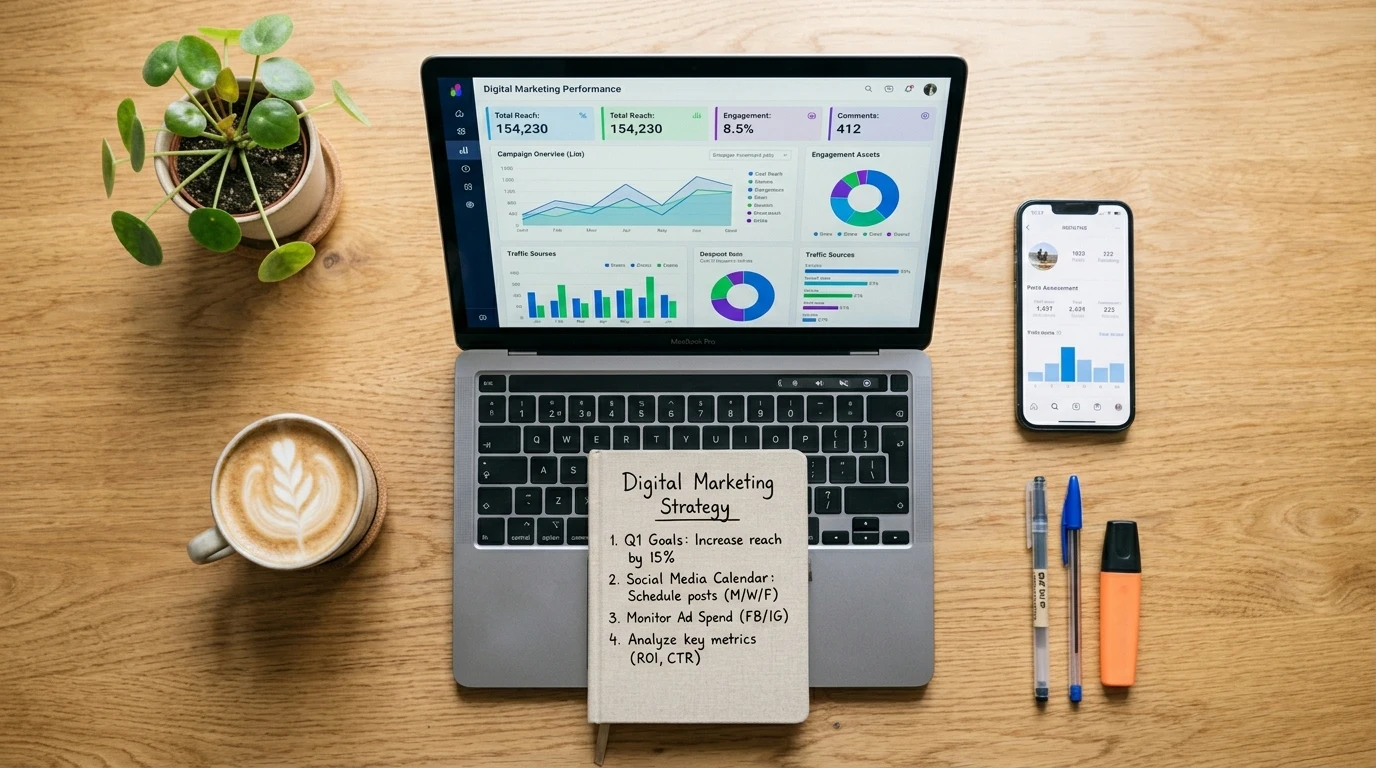
Digital marketing offers something traditional marketing cannot: complete measurability. Track your results continuously and adjust your approach based on data, not guesswork.
Key performance indicators (KPIs) to track include:
-
Website traffic and traffic sources
-
Conversion rates (how many visitors take desired actions)
-
Click-through rates on ads and emails
-
Return on ad spend (ROAS)
-
Customer acquisition cost (CAC)
-
Customer lifetime value (CLV)
Need help generating high-quality leads through digital marketing? Explore our lead generation services to attract and convert more customers online.
7 Actionable Digital Marketing Tips for 2026
Ready to put these concepts into practice? Here are seven tips you can implement immediately.
Tip 1: Create Content for Answers, Not Just Keywords
Search engines and AI tools now prioritize content that directly answers user questions. Structure your content with clear headings and answer common questions within the first few sentences under each heading.
Tip 2: Treat Social Media as a Search Engine
People increasingly search on TikTok, Instagram, and YouTube instead of Google. Optimize your social content with relevant keywords in captions, descriptions, and hashtags. When your social content aligns with search intent, it becomes discoverable beyond just your followers.
Tip 3: Build an Email List from Day One
Email marketing delivers the highest ROI of any digital channel. Start building your email list immediately—do not wait until you have "enough" traffic or customers. Offer a lead magnet (discount, ebook, checklist) in exchange for email addresses.
Tip 4: Use Structured Data (Schema Markup)
Schema markup tells search engines exactly what your content means. It helps AI tools understand your business offerings, location, customer reviews, and services. Implementing schema markup is like giving AI a labeled blueprint of your website.
Tip 5: Prioritize Mobile Experience
Mobile devices account for the majority of web traffic. Ensure your website loads quickly on phones, uses responsive design, and provides a seamless user experience on smaller screens.
Tip 6: Repurpose Content Across Channels
Create one high-quality piece of content (like a blog post) and repurpose it into multiple formats: a video, a carousel post, an email newsletter, and a few social media snippets. This approach saves time while maximizing reach.
Tip 7: Test, Learn, and Iterate
Digital marketing rewards experimentation. Run A/B tests on your subject lines, ad creatives, landing pages, and calls to action. Keep what works and discard what does not. The best digital marketers never stop testing.
Common Digital Marketing Mistakes to Avoid
Even experienced marketers make mistakes. Here are the most common pitfalls and how to avoid them.
Mistake 1: Trying to Do Everything at Once
Focusing on too many channels spreads your resources thin and dilutes your results. Start with one or two channels that align with your audience and goals. Master them before adding more.
Mistake 2: Ignoring Data and Analytics
Digital marketing generates enormous amounts of data. Ignoring that data means flying blind. Check your analytics regularly and let data guide your decisions.
Mistake 3: Forgetting About Mobile Users
A website that looks great on desktop but breaks on mobile will frustrate and lose customers. Test your site on multiple devices and screen sizes.
Mistake 4: Focusing Only on Acquisition, Not Retention
Acquiring a new customer costs five to seven times more than retaining an existing one. Invest in email marketing, loyalty programs, and customer experience to keep customers coming back.
Mistake 5: Neglecting SEO While Focusing on Paid Ads
PPC drives immediate results, but SEO builds sustainable, long-term traffic. Do not abandon SEO just because it takes time to show results. A balanced approach works best.
Want a website that converts visitors into customers? Check out our web development services to build a high-performing site tailored to your business.
Frequently Asked Questions (FAQ)
Q1: What is digital marketing in simple terms?
Digital marketing promotes products, services, or brands using online channels like search engines, social media, email, and websites. Instead of billboards or TV ads, you reach customers where they already spend time—on their phones and computers.
Q2: How much does digital marketing cost for a small business?
Costs vary widely depending on your goals and channels. A small business might spend $500–$5,000 per month on digital marketing, including SEO tools, social media ads, email software, and content creation. You can start small and scale up as you see results.
Q3: Which digital marketing channel gives the best ROI?
Email marketing consistently delivers the highest ROI, returning $36–$42 for every dollar spent. SEO and content marketing offer excellent long-term ROI, while PPC provides faster but often more expensive results. The "best" channel depends on your specific goals and timeline.
Q4: How long does it take to see results from digital marketing?
PPC campaigns can generate traffic and leads within hours of launch. SEO and content marketing typically take 3–6 months to show meaningful results. Email marketing can produce results immediately if you have an existing list. Set realistic expectations for each channel.
Q5: Do I need to use all digital marketing channels?
Absolutely not. Trying to use every channel usually leads to mediocre results across the board. Identify where your target audience spends time online and focus your efforts on those specific channels. One well-executed channel beats five half-hearted attempts.
Q6: Is digital marketing only for large companies with big budgets?
No. Digital marketing levels the playing field for small businesses. A local bakery can rank for "best croissants in [city]" without spending a dime on ads. A startup can build an audience through valuable content and social media engagement. Budget helps, but strategy and consistency matter more.
Q7: How has AI changed digital marketing?
AI has transformed content creation, ad targeting, data analysis, and personalization. Marketers now use AI to generate ad copy, analyze customer behavior, predict trends, and automate email sequences. However, human oversight remains essential—AI still produces inaccurate or inconsistent outputs that need review.
Q8: What skills do I need for a career in digital marketing?
Key skills include content creation (writing, video, design), data analysis, SEO knowledge, social media management, email marketing, and paid advertising. Soft skills like strategic thinking, creativity, and adaptability are equally important. The field changes constantly, so continuous learning is essential.
Conclusion
Digital marketing is not a magic bullet, and it is not a set-it-and-forget-it system. It requires consistent effort, strategic thinking, and a willingness to learn and adapt. But when done right, it transforms how businesses connect with customers, build trust, and drive growth.
The fundamentals I covered in this guide—understanding your audience, choosing the right channels, creating valuable content, and measuring your results—will serve you well regardless of how technology evolves. Start with one channel, get good at it, and expand from there. Pay attention to the data, but do not let it paralyze you. Sometimes the best way to learn is to launch, measure, and improve.
Digital marketing moves fast, but the core principles remain surprisingly stable. Focus on helping your customers, and the results will follow.
Want to improve your website’s user experience and conversions? Explore our UI/UX services to create a seamless, high-performing digital experience for your audience.