

Search engine optimization constantly evolves, but certain outdated tactics stubbornly refuse to disappear. Decades ago, webmasters manipulated search rankings by packing web pages with repetitive phrases. Search engines relied purely on exact-match text strings to understand content relevance. Today, artificial intelligence and natural language processing power Google’s core algorithms. Content creators must understand that modern search engines reward deep topical authority and penalize manipulative repetition.
Keyword stuffing represents one of the oldest, most damaging black-hat SEO techniques still practiced today. When you cram exact-match phrases into content unnaturally, you destroy the user experience and invite severe algorithmic penalties. Need help improving your website visibility safely? Explore our comprehensive digital services to build a stronger, penalty-free organic search strategy.
This comprehensive guide explores the mechanics of keyword stuffing, the algorithmic penalties associated with it, and the modern, entity-driven alternatives you should use to rank in both traditional search and AI-powered answer engines.
What is Keyword Stuffing?
Keyword stuffing occurs when a content creator unnaturally overloads a webpage with specific target terms to manipulate search engine rankings. Instead of writing for human readers, the author writes for search engine crawlers, repeating phrases to the point of absurdity.
Before diving into advanced tactics, beginners should start by understanding what SEO keywords are . Keywords serve as the bridge between user search intent and your website’s solutions. However, when you stuff them, you burn that bridge entirely.
Search engines look for natural language. When algorithms encounter a page repeating “best running shoes” fifteen times in a single paragraph, they flag the content as spam. Google explicitly prohibits this practice in its Search Essentials guidelines, categorizing it as manipulative behavior.
Visible Keyword Stuffing
Visible stuffing happens directly in the main body content where human users can see it. This aggressive tactic ruins the reading experience. Common examples include:
- Repeating the same exact-match phrase across multiple headings.
- Inserting blocks of text that list cities, states, or zip codes.
- Forcing unnatural phrases into sentences (e.g., “If you want the best cheap plumber Chicago, call our best cheap plumber Chicago team today”).
- Creating long lists of irrelevant terms at the bottom of a page.
Invisible Keyword Stuffing

Invisible stuffing attempts to hide repetitive terms from users while keeping them visible to search engine crawlers. Modern search engines easily detect and penalize these deceptive tactics. Common methods include:
- Adding white text on a white background.
- Hiding text blocks behind images or off-screen using CSS positioning.
- Overloading image alt attributes with dozens of unrelated keywords.
- Packing title attributes or meta keywords tags with massive lists of terms.
The Evolution of Search Engine Algorithms
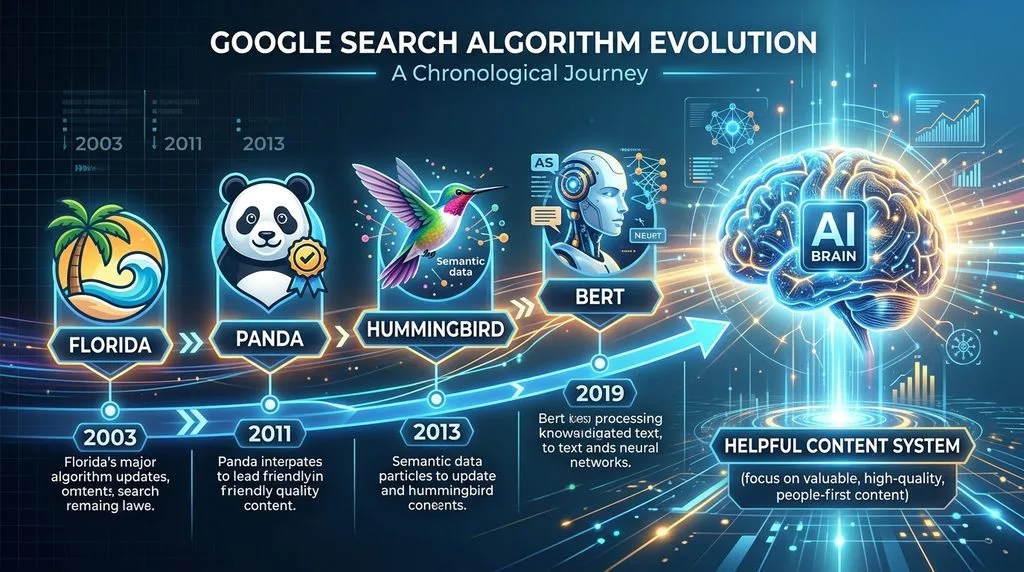
To understand why keyword stuffing fails today, you must understand how search engines evolved. In the late 1990s and early 2000s, search algorithms lacked sophistication. They ranked pages based heavily on keyword density the percentage of times a word appeared compared to the total word count.
Want higher rankings without risking dangerous algorithmic penalties? Explore our proven SEO strategies for sustainable, long-term organic traffic growth.
As webmasters abused this system, Google launched massive algorithmic updates to combat web spam and reward high-quality content.
The Florida Update (2003)
Google’s Florida update sent shockwaves through the SEO industry. It specifically targeted spammy tactics, including aggressive keyword stuffing and invisible text. Many manipulative websites lost their rankings overnight. This update signaled the beginning of Google’s war on black-hat SEO.
Google Panda (2011)
The Panda update revolutionized how Google evaluated content quality. It targeted thin content, content farms, and heavily stuffed pages. Panda introduced machine learning concepts to grade websites based on user experience, reading level, and actual value. Pages that read unnaturally due to keyword repetition suffered massive traffic drops.
Google Hummingbird (2013)
Hummingbird fundamentally shifted Google from a “string-matching” engine to a “thing-matching” engine. Instead of looking for exact keyword matches, Hummingbird tried to understand the semantic meaning behind search queries. This update rendered keyword density entirely obsolete.
BERT and Natural Language Processing (2019)
Bidirectional Encoder Representations from Transformers (BERT) allowed Google to understand the context of words in a search query. BERT analyzes words in relation to all the other words in a sentence, rather than in isolation. With BERT, Google easily recognizes unnatural phrasing. If you force keywords into sentences without grammatical flow, BERT flags the content as low quality.
The Helpful Content System (2022-Present)
Google introduced the Helpful Content system to reward content created for humans over content created primarily for search engines. This machine-learning system operates continuously, downgrading sites that feature robotic, stuffed, or unhelpful text.
Examples of Keyword Stuffing: What Not to Do
Recognizing keyword stuffing helps you avoid accidental spam. Many novice SEOs stuff keywords unintentionally by rigidly adhering to outdated advice about keyword density.
Example 1: The Awkward Local SEO Paragraph
Bad: “Are you looking for a plumber in Dallas? Our plumber in Dallas provides the best plumber in Dallas services. When you need a plumber in Dallas, contact our plumber in Dallas team for fast repair.”
Good: “Do you need plumbing repairs in the Dallas area? Our licensed technicians provide 24/7 emergency service, leak detection, and pipe repair for both residential and commercial properties. Contact us today for a free estimate.”
The good example naturally includes the core concept while introducing related semantic terms like “licensed technicians,” “leak detection,” and “residential.”
Example 2: The Geographic Dump
Bad: “We sell customized office furniture. We serve customers in New York, Los Angeles, Chicago, Houston, Phoenix, Philadelphia, San Antonio, San Diego, Dallas, Austin, San Jose, Fort Worth, Jacksonville, Columbus, Charlotte, Indianapolis…”
Good: “We deliver customized office furniture nationwide, with dedicated installation teams stationed across all major US metropolitan areas, from the East Coast to the Pacific Northwest.”
Example 3: Alt Text Stuffing
Bad Alt Text:<img src="coffee-mug.jpg" alt="coffee mug cheap coffee mug buy coffee mug red coffee mug best coffee mug">
Good Alt Text:<img src="coffee-mug.jpg" alt="Red ceramic coffee mug resting on a wooden desk">
Why Keyword Stuffing Destroys Your SEO Strategy
Stuffing keywords damages your website in multiple ways. The consequences extend far beyond simple ranking drops; they affect user trust, conversion rates, and overall brand perception.
For a comprehensive technical definition of this penalty-inducing tactic, you can review the authoritative keyword stuffing glossary entry from Ahrefs.
1. Algorithmic Penalties
Google’s algorithms automatically demote pages that exhibit keyword stuffing. Because systems like Panda and the Helpful Content Update run continuously, a heavily stuffed site will slowly bleed organic traffic. The algorithm identifies the lack of semantic richness and pushes the page down in the Search Engine Results Pages (SERPs).
2. Manual Action Penalties
In severe cases, human reviewers at Google will issue a Manual Action against your website. If a reviewer catches egregious spam tactics, they apply a penalty that removes your page—or your entire website—from Google’s index. You must completely clean your website and submit a reconsideration request to recover from a manual action.
3. Destruction of User Experience (UX)
Readers visit your website to solve problems, learn information, or make purchases. When they encounter robotic, repetitive text, they immediately lose trust in your brand. Poor writing screams “unprofessional.”
4. Skyrocketing Bounce Rates
When users encounter stuffed text, they click the “back” button on their browser immediately. Search engines monitor this behavior. A high bounce rate coupled with a low “time on page” signals to Google that your content failed to satisfy the user’s search intent. This negative user signaling further depresses your rankings.
5. Plummeting Conversion Rates
Even if a stuffed page accidentally ranks well temporarily, it will not convert visitors into customers. Buyers require persuasive, clear, and authoritative copy. Repetitive SEO jargon alienates potential buyers and pushes them toward your competitors.
Generative Engine Optimization (GEO) vs. Keyword Stuffing

The rise of artificial intelligence has fundamentally altered how users search for information. Platforms like Perplexity, ChatGPT, and Google’s AI Overviews generate direct answers instead of simply providing lists of blue links. This shift introduces Generative Engine Optimization (GEO).
AI answer engines utilize Large Language Models (LLMs) and Retrieval-Augmented Generation (RAG) to fetch data. These systems do not care about keyword density. They care about entity relationships, factual accuracy, and clear answers.
Build domain authority safely while navigating AI search changes. Let our experts craft high-quality SEO backlinks that search engines and AI models actually trust.
When an LLM parses a webpage filled with stuffed keywords, the attention mechanisms within the neural network break down. The AI identifies the text as low-value noise and excludes it from the generated answer. To rank in AI overviews, you must write concisely, structure data logically, and use rich, descriptive language that connects relevant entities.
Entities Over Exact Matches
Search engines now operate using Knowledge Graphs. A Knowledge Graph maps real-world entities (people, places, concepts, things) and the relationships between them.
If you write an article about the entity “Eiffel Tower,” Google expects to see related entities like “Paris,” “Gustave Eiffel,” “wrought-iron lattice,” and “Champ de Mars.” If you simply repeat the keyword “Eiffel Tower tickets” forty times without mentioning the related entities, Google knows your content lacks depth.
How to Identify Keyword Stuffing on Your Website
Website owners often inherit legacy content created by older SEO agencies that utilized outdated tactics. You must audit your website to identify and remove stuffed content before algorithms penalize you.
1. Conduct a Content Audit
Export a list of your highest-traffic pages and your most important conversion pages. Read the content manually. If the text sounds unnatural, robotic, or forces a specific phrase repeatedly, you likely have a keyword stuffing problem.
2. Use the “Read Aloud” Test
The easiest way to detect unnatural keyword placement involves reading your content out loud. Human speech follows natural rhythms and utilizes pronouns (he, she, it, they) instead of repeating proper nouns endlessly. If you stumble over a sentence because it repeats a phrase too many times, rewrite it.
3. Check Keyword Density Metrics (With Caution)
While keyword density is not a ranking factor, it serves as a useful diagnostic metric. Use SEO tools to check the frequency of your target phrases. If your primary keyword makes up more than 3% to 5% of the total word count, you should closely examine the text. Remember, do not optimize for a specific density percentage; just use high density as a warning sign.
4. Analyze User Engagement Metrics
Open Google Analytics and examine your user behavior data. Look for pages with high impressions, decent click-through rates, but incredibly high bounce rates and low average session durations. These metrics often indicate that users find the content unreadable or unhelpful upon arrival.
How to Recover from a Keyword Stuffing Penalty
If your website suffered a massive traffic drop due to aggressive over-optimization, you must act quickly to clean your domain. Recovery takes time, but methodical optimization restores algorithmic trust.
Step 1: Identify the Affected Pages
Determine which pages lost traffic. If you received a message in Google Search Console regarding a Manual Action, Google will specify whether the penalty affects specific URLs or the entire site.
Before rewriting everything blindly, you need to properly find and choose keywords for SEO based on modern intent analysis rather than sheer search volume.
Step 2: Rewrite for Search Intent
Delete the stuffed paragraphs. Rewrite the content focusing entirely on answering the user’s question. Replace exact-match keywords with pronouns and natural synonyms. Structure the content with clear H2 and H3 headings to break up large walls of text.
Step 3: Clean Up Meta Tags and Code
Check your backend code. Remove exhaustive lists of keywords from your image alt tags. Ensure your title tags read naturally. Delete any hidden text or transparent CSS elements immediately.
Step 4: Submit a Reconsideration Request
If you suffered a Manual Action, you must submit a reconsideration request through Google Search Console. Explain clearly that you removed the spammy elements, rewrote the content for users, and committed to Google’s quality guidelines moving forward. Do not submit this request until you have cleaned the entire website thoroughly.
Modern, Safe Alternatives to Keyword Stuffing
You still need to use keywords to rank well; you just need to use them intelligently. Modern SEO focuses on topical authority and semantic depth rather than repetition.
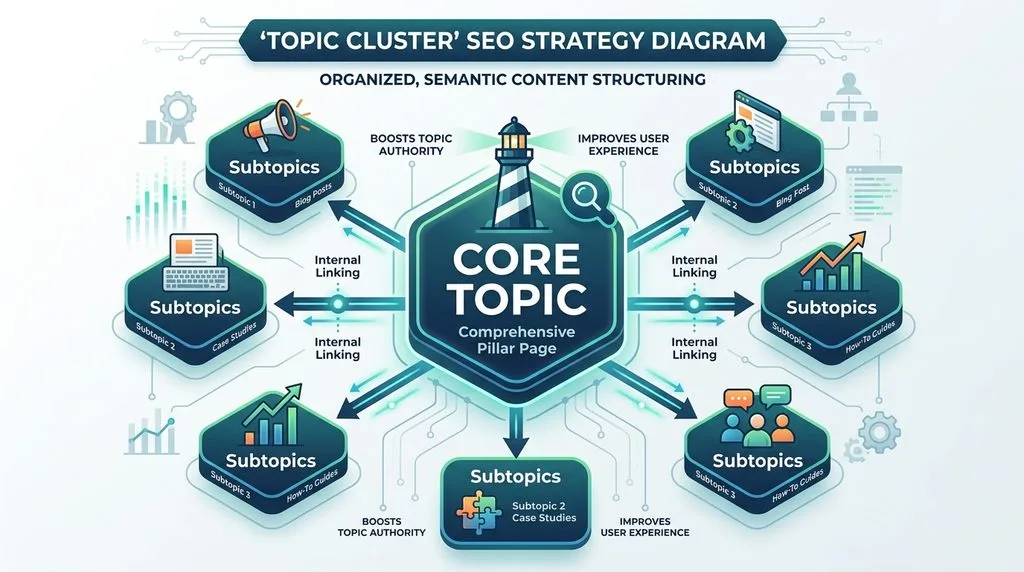
1. Execute Thorough Topic Clustering
Instead of trying to force 50 keywords onto a single page, build a topic cluster. Create one broad “pillar page” that covers the main topic at a high level. Then, create multiple supporting “cluster pages” that dive deep into specific subtopics. Link these pages together using descriptive anchor text.
This strategy proves to Google that you hold deep expertise in a subject. It naturally spreads your keyword variations across multiple targeted pages. To master this foundation, you must conduct thorough keyword research to map out your pillar and cluster structures.
2. Utilize Latent Semantic Indexing (LSI) Terms
LSI keywords represent words and phrases that are conceptually related to your primary topic. They are not direct synonyms, but rather context clues.
For example, if your primary keyword is “apple,” search engines need context to know if you mean the fruit or the technology company.
- If you include LSI terms like “orchard,” “crisp,” “pie,” and “harvest,” the engine understands you mean the fruit.
- If you include LSI terms like “iPhone,” “MacBook,” “iOS,” and “Tim Cook,” the engine understands you mean the technology company.
Using LSI terms naturally increases your content’s relevance without requiring you to stuff the primary keyword.
3. Focus on Search Intent
Search engines prioritize intent over exact phrases. Analyze what the user actually wants when they type a query.
- Informational Intent: The user wants to learn something. Give them detailed guides, definitions, and tutorials. Target these users with informational keywords that answer “how,” “what,” and “why.”
- Navigational Intent: The user wants to find a specific website or page.
- Transactional Intent: The user wants to make a purchase. Give them pricing tables, product comparisons, and clear buy buttons.
When you match intent perfectly, you satisfy the user, which satisfies the search engine algorithm. Need a customized roadmap for search visibility? Review our specialized online services tailored to perfectly match your target audience’s search intent.
4. Implement TF-IDF Analysis
Term Frequency-Inverse Document Frequency (TF-IDF) is a statistical measure used to evaluate how important a word is to a document within a large collection of documents. Advanced SEO tools analyze the top 10 ranking pages for a keyword and calculate the TF-IDF scores for various terms.
By looking at TF-IDF data, you can identify important semantic topics your competitors cover that you missed. Adding these missing concepts to your content improves its comprehensiveness naturally, without resorting to keyword stuffing.
Best Practices for Natural Keyword Placement
While repetition damages your SEO, you still must place your primary keyword in vital HTML elements to establish initial relevance. Follow these best practices for safe, effective optimization.
Optimize the Title Tag and H1 Heading
Include your primary keyword in your <title> tag and your main <h1> heading. Place the keyword toward the beginning of the title if it reads naturally. You only need the exact keyword here once.
Write Compelling Meta Descriptions
Meta descriptions do not directly impact rankings, but they heavily influence click-through rates (CTR). Include your target keyword naturally in the meta description. When a user searches for that term, Google bolds it in the search results, drawing the user’s eye and encouraging clicks.
Use the Keyword in the First 100 Words
Search engines assign slightly more weight to terms appearing at the top of a webpage. Introduce your main topic within the first paragraph to establish immediate relevance for both crawlers and human readers.
Use Logical URL Slugs
Keep your URLs short, clean, and descriptive. If your article covers keyword stuffing, a URL like /blog/keyword-stuffing/ works perfectly. Avoid stuffing the URL (e.g., /blog/keyword-stuffing-what-is-keyword-stuffing-seo/).
Optimize Image Alt Text Accurately
Use image alt text for its intended purpose: describing the image to visually impaired users and search engine crawlers. If the image naturally relates to your keyword, include it. If it doesn’t, describe what is actually in the picture.
The Role of Secondary Keywords and Subtopics
Great content answers questions before the user even has to ask them. To rank highly in modern search, map out secondary keywords and frame them as logical subheadings (H2s and H3s).
Consider a page targeting the primary keyword “how to brew coffee.”
Instead of stuffing “how to brew coffee” into every paragraph, use secondary keywords to build a comprehensive guide:
- H2: Best Water Temperature for Brewing
- H2: Choosing the Right Coffee Beans
- H2: The Importance of Burr Grinders
- H2: French Press vs. Pour Over Methods
By structuring your content with entity-rich subtopics, you naturally rank for hundreds of long-tail variations without ever repeating your primary keyword unnecessarily.
Advanced NLP and Salience Scores
Google utilizes Natural Language Processing to assign “salience scores” to entities within your text. Salience measures how central an entity is to the overall meaning of your text.
You achieve a high salience score not by repeating a word, but by placing it at the center of the narrative. Linking related concepts, using the entity as the subject of active verbs, and building a tight semantic web around the topic increases salience. Content optimized for high NLP salience completely immunizes your website against keyword stuffing penalties while maximizing organic reach.
Conclusion
Keyword stuffing belongs in the graveyard of SEO history. Attempting to manipulate search engines through unnatural repetition destroys your brand’s credibility, ruins the user experience, and guarantees algorithmic penalties. As search engines shift toward Generative Engine Optimization, AI overviews, and deep semantic understanding, content quality matters more than ever.
Focus on building topical authority. Write naturally for human beings, utilize LSI terms, answer user intent comprehensively, and structure your data logically. When you provide genuine value, search engines will naturally reward you with top positions.
Ready to dominate search results the right way? Partner with us for expert SEO management today and secure sustainable, penalty-free traffic for your business.
Frequently Asked Questions (FAQs)
1. Does keyword density still matter for SEO?
No, modern search algorithms like Google’s BERT and Hummingbird do not use specific keyword density percentages to rank pages. They analyze context, search intent, and semantic meaning instead of counting exact-match repetitions.
2. How many times should I use a keyword on a page?
There is no magic number. You should use the primary keyword in your Title tag, H1, first paragraph, and URL. After that, use it only when it flows naturally in conversation, substituting pronouns and synonyms for the rest of the content.
3. Will I get penalized for accidentally repeating a word?
No, search engines understand natural language patterns. If a word must naturally appear frequently (like “insurance” in an article about insurance policies), Google will not penalize you. Penalties apply to forced, unnatural repetition designed to manipulate rankings.
4. What is invisible keyword stuffing?
Invisible stuffing involves hiding keywords from human readers while keeping them visible to search crawlers. This includes matching text color to the background color, pushing text off-screen with CSS, or hiding massive lists of terms inside the code.
5. How do I fix a keyword-stuffed page?
To fix a stuffed page, rewrite the content for human readability. Remove repetitive exact-match phrases, replace them with natural synonyms or pronouns, structure the text with descriptive headings, and clean up overloaded image alt text and meta tags.
6. Do AI search engines like ChatGPT care about keywords?
AI-powered answer engines focus on entities, relationships, and direct answers (Generative Engine Optimization) rather than traditional keywords. Stuffing text actually confuses Large Language Models, making them less likely to use your content as a source.
7. Can too many tags in WordPress cause a keyword stuffing penalty?
Yes, creating dozens of highly similar tags for a single blog post can create thin, duplicate tag pages that Google views as low-quality, keyword-stuffed content. Stick to a few broad categories and highly relevant tags.
8. What are LSI keywords and how do they replace stuffing?
Latent Semantic Indexing (LSI) keywords are conceptually related terms (e.g., “CPU” and “keyboard” for the topic “computer”). Using LSI terms helps search engines understand your topic’s depth and context without requiring you to repeat your primary keyword unnaturally.
Keep reading
All articles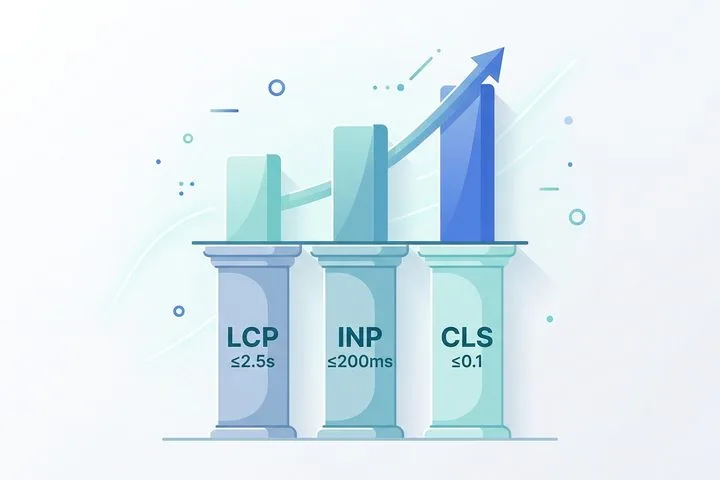
What Are Core Web Vitals & Why Do They Still Matter?
The digital landscape is ruthless when it comes to performance. Users expect websites to load instantaneously, respond to taps without hesitation, and…
Read article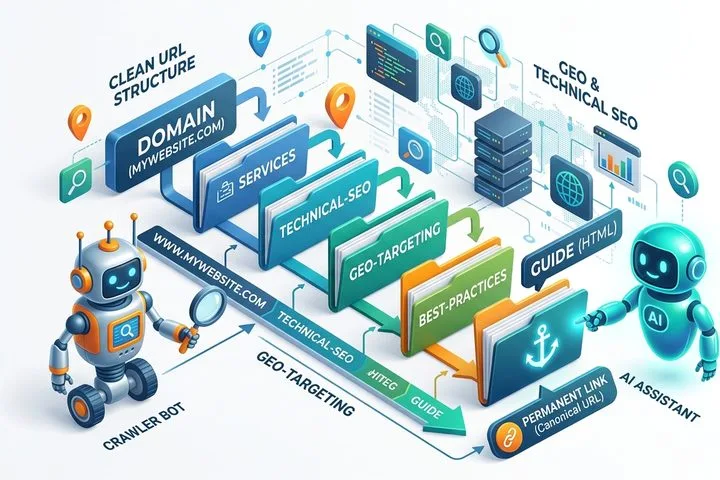
Creating SEO-Friendly URLs: The Complete 2026 Guide to Rankings, Clicks, and AI Citations
Every time you publish a page, you make a decision that follows it for years: you choose its URL. Most site owners…
Read article