

Digital marketing constantly evolves, yet some foundational elements remain unshakable. Search engines update their algorithms thousands of times a year, introducing artificial intelligence and complex generative features. Despite these massive technological shifts, backlinks hold their ground as a primary ranking signal. Understanding the role of backlinks in SEO represents the difference between a website that languishes on page five and a digital powerhouse that dominates the top results.
Search engines treat the internet as a massive popularity contest. They view every hyperlink pointing to your site as a vote of confidence. However, they do not count every vote equally. Modern search algorithms evaluate the context, authority, and relevance of every link. Furthermore, with the rise of Generative Engine Optimization (GEO), AI-driven search tools now analyze these same backlink profiles to determine which websites deserve citation in their generated overviews.
Ready to elevate your rankings? Explore proven backlink building strategies to drive targeted organic traffic to your website today.
Building a robust link profile requires more than blind outreach. It demands a calculated, human-centric approach that aligns with both traditional SEO principles and modern generative engine requirements. This comprehensive guide will dissect exactly how backlinks function, why they matter, and how you can forge a winning strategy.
Understanding the Core Mechanics of Backlinks

Before you can build an effective strategy, you must understand exactly what backlinks are and how search engines process them. A backlink often called an inbound link or incoming link simply occurs when one website links to another.
When you publish a high-quality article and an industry authority links to it, you earn a backlink. This simple digital connection triggers a complex evaluation process within search engine algorithms.
How Search Engines Evaluate Inbound Links
Search algorithms rely on links to discover new web pages and determine how well a page should rank. Google’s original algorithm, PageRank, revolutionized internet search by counting the number and quality of links to a page to estimate an essential baseline of website importance.
Today, algorithms look far beyond simple link volume. They analyze the following critical factors:
- Source Authority: A link from a major news outlet carries exponentially more weight than a link from a newly created, unknown blog.
- Anchor Text: The clickable words used in the hyperlink help search engines understand the topic of the linked page.
- Contextual Relevance: A link from a cooking blog to a restaurant website makes sense. A link from an automotive repair site to a bakery looks suspicious.
- Placement: Search engines assign more value to links embedded naturally within the main body content than those hidden in footers or sidebars.
To see how Google fundamentally advises webmasters regarding link structure and site architecture, you can review the Google Search Central Starter Guide.
The Transition to Generative Engine Optimization (GEO)
Traditional SEO focused almost entirely on ranking blue links on a search engine results page (SERP). Today, we must optimize for Generative Engines AI systems that summarize information and cite authoritative sources directly in the search interface.
Backlinks play a crucial role in GEO. Large Language Models (LLMs) learn which brands and websites hold authority based on their digital footprint. When hundreds of reputable websites link to your domain, AI engines classify your brand as a primary source of truth. Consequently, these AI systems become much more likely to feature your insights and cite your website in their conversational answers.
Quality vs. Quantity: The Golden Rule of Link Building
Many novice marketers fall into the trap of chasing raw link volume. They assume that acquiring 1,000 links overnight will instantly boost their rankings. In reality, a high-volume, low-quality approach actively harms your digital presence.
One single, highly relevant link from a recognized industry leader will always outperform hundreds of low-quality links from spam directories.
Assessing Domain Authority and Trust
SEO professionals use various third-party metrics like Domain Authority (DA) or Domain Rating (DR) to estimate a website’s ranking power. While search engines do not use these exact third-party metrics internally, they operate on similar principles of trust and topical authority.
When you seek out backlinks, prioritize websites that demonstrate genuine user engagement, publish high-quality content, and maintain a rigorous editorial standard. A clean backlink profile shields your website against algorithmic penalties and establishes long-term stability.
Need expert guidance? Discover actionable backlink strategies tailored to boost your domain authority and outrank your toughest competitors.
Contextual Placement Matters Most
Search engines employ advanced natural language processing to read the sentences surrounding a hyperlink. They assess whether the link genuinely aids the user experience or if someone shoehorned it in strictly for SEO purposes.
For instance, if you run a financial consultancy, securing a backlink within a well-researched article about tax planning holds immense value. To deeply integrate these foundational elements into your broader marketing efforts, review this resource on mastering a comprehensive seo backlink approach. Aligning your content with the exact intent of the referring page ensures maximum link equity transfer.
Essential Types of Backlinks You Need to Know
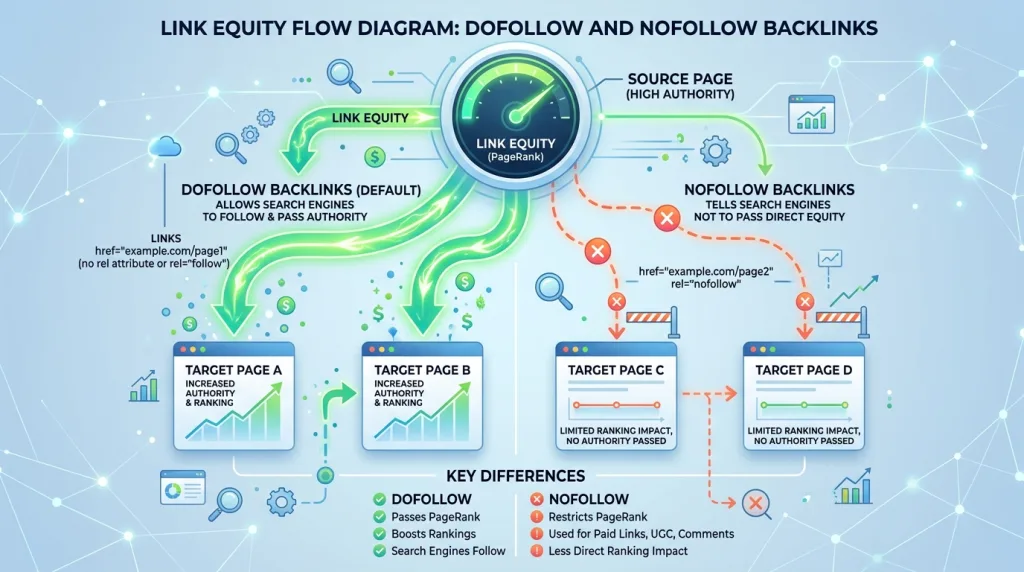
Not all links pass SEO value in the exact same way. Website owners use specific HTML attributes to tell search engines how to treat outgoing links. You must understand these attributes to build a balanced, natural-looking link profile.
Dofollow Links
By default, every link on the internet is a “dofollow” link. This simply means the link lacks any attribute telling search engines to ignore it. Dofollow links pass authority often referred to as “link juice” from the linking site to your site. These links directly influence your organic rankings and form the backbone of your SEO strategy.
Nofollow Links
Website owners use the rel="nofollow" attribute to link to a page without passing authority. Search engines originally introduced this tag to combat comment spam. While nofollow links do not directly boost your search rankings, they still drive valuable referral traffic and build brand awareness. A natural backlink profile always contains a healthy mix of both dofollow and nofollow links.
Sponsored and UGC Links
In recent years, search engines introduced two additional link attributes to provide more granular context:
- rel=”sponsored”: Website owners must use this attribute for any link created as part of an advertisement, sponsorship, or paid arrangement.
- rel=”ugc”: This stands for User Generated Content. Webmasters apply this attribute to links left by users in forum posts, blog comments, or community discussion boards.
Understanding these tags ensures you remain compliant with search engine guidelines while accurately assessing the SEO value of your acquired links.
Laying the Groundwork for a Backlink Strategy
You cannot build a successful backlink strategy on a weak foundation. Before you reach out to a single website asking for a link, you must prepare your own digital house.
Mastering Technical SEO First
Search engines will ignore your backlinks if they cannot crawl or index your website properly. Your site must load at lightning speed, display perfectly on mobile devices, and maintain a secure HTTPS connection. Fix broken links, resolve redirect chains, and ensure your site architecture allows link equity to flow seamlessly from your high-performing pages to your newer content.
Conducting a Content Audit
People only link to exceptional content. You cannot convince an authoritative website to link to a thin, 300-word blog post that offers no unique value. Audit your existing content to identify your strongest assets. Look for original research, comprehensive guides, data-driven infographics, and unique industry insights.
Build a robust foundation for long-term growth by mastering SEO backlinks with our comprehensive, data-driven optimization approaches.
Creating Linkable Assets
If you lack content worth linking to, you must create it. Linkable assets serve as powerful magnets that naturally attract backlinks over time. Consider developing the following types of high-value content:
- Original Data and Industry Studies: Journalists and bloggers constantly seek fresh statistics to support their articles.
- Ultimate Guides: Comprehensive, long-form content that solves a specific problem completely.
- Interactive Tools: Calculators, templates, or quizzes that provide immediate, personalized utility to the user.
- Expert Roundups: Articles that compile insights from various industry leaders, incentivizing those leaders to share and link to the final piece.
Proven Backlink Building Strategies for Modern SEO

Once your technical foundation is solid and your linkable assets are ready, you must actively promote your content. Passive link earning takes years. Proactive link building accelerates your growth exponentially.
The Skyscraper Technique 2.0
The Skyscraper technique remains one of the most effective ways to earn high-quality links. You start by finding top-performing content in your niche that already possesses a massive number of backlinks. You then create a piece of content that improves upon the original in every conceivable way—better design, deeper insights, updated statistics, and more engaging multimedia.
Once you publish your superior asset, you reach out to every website that linked to the original, outdated article. You gently introduce your new piece as a more valuable resource for their readers. Because you already know these webmasters are willing to link to this specific topic, your conversion rate on outreach significantly increases.
Digital PR and Resource Link Building
Digital Public Relations involves creating newsworthy content and distributing it to journalists, industry bloggers, and major publications. When you release a compelling study or a unique data set, journalists will naturally cite your website as the source.
Furthermore, you can leverage resource link building. Many educational institutions, government websites, and industry associations maintain “resource pages” that link to helpful tools and articles. Identify resource pages relevant to your niche and pitch your linkable assets as a valuable addition to their lists. For advanced insights on how search trends impact digital PR, resources like Search Engine Journal offer excellent ongoing industry coverage.
Strategic Guest Posting
Guest posting earned a bad reputation when marketers began abusing it by spinning low-quality articles and blasting them across irrelevant websites. However, strategic, high-value guest posting remains incredibly powerful.
Identify authoritative websites in your exact industry that accept contributor content. Pitch them highly original, well-researched article ideas that serve their specific audience. Within the body of your guest post, you can naturally include a contextual backlink to a relevant resource on your own website. Focus entirely on providing value to the host website’s audience, and the SEO benefits will naturally follow.
Broken Link Building
The internet constantly changes. Websites redesign, companies rebrand, and pages disappear. This creates an epidemic of broken links hyperlinks that point to frustrating 404 error pages.
Broken link building solves a problem for website owners while earning you a valuable link. You use SEO tools to scan industry-relevant websites for broken outbound links. When you find a dead link that previously pointed to content similar to yours, you contact the webmaster. You politely notify them of the broken link improving their site’s user experience and suggest your high-quality page as the perfect replacement.
Avoiding Toxic Backlinks and Link Schemes
As you execute your strategy, you must simultaneously protect your website from toxic links. Search engines aggressively penalize websites that attempt to manipulate their algorithms through deceptive link schemes.
Identifying Link Spam
Not all links help your site. Some actively harm it. Toxic backlinks generally originate from low-quality sources designed specifically to game the system. Learn to identify the warning signs of toxic links:
- Links coming from completely irrelevant foreign language websites.
- Excessive links utilizing exact-match commercial anchor text.
- Links from private blog networks (PBNs) or known link farms.
- Automated directory submissions and spammy blog comments.
Understanding the Disavow Tool
Search engines have become incredibly proficient at ignoring low-quality spam links automatically. In most cases, you do not need to worry about a few strange links pointing to your site. However, if you experience a targeted negative SEO attack, or if you previously engaged in manipulative link building, you may need to take action.
Search engines provide a Disavow Tool that allows webmasters to submit a list of toxic URLs or domains. By submitting this file, you explicitly ask the search engine to ignore those specific links when evaluating your website. Use this tool with extreme caution, as incorrectly disavowing helpful links can severely damage your organic rankings.
Measuring Your Backlink Strategy ROI
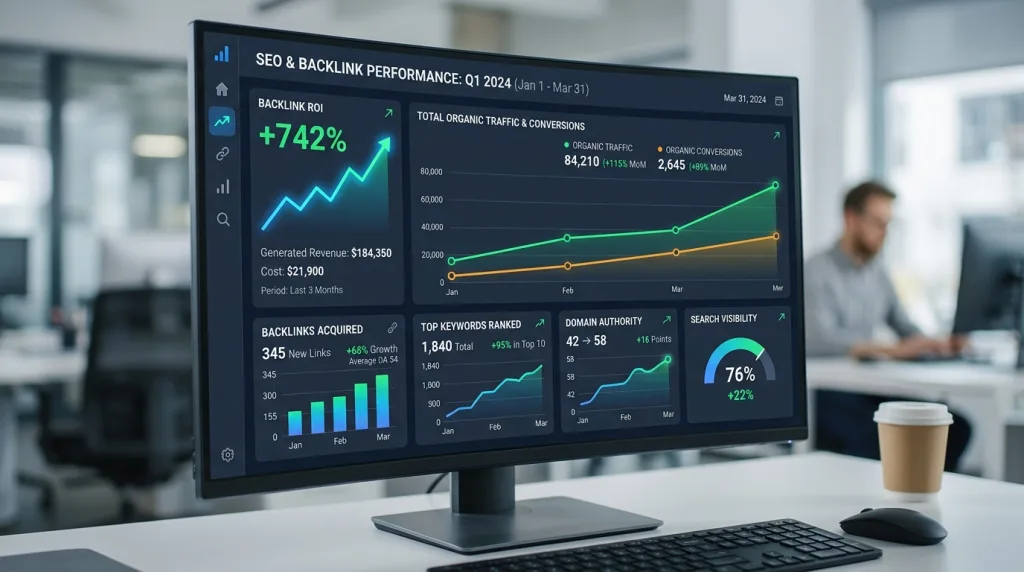
You cannot manage what you do not measure. A successful backlink strategy requires continuous monitoring and optimization. You must track specific metrics to ensure your outreach efforts generate a positive return on investment.
Tracking Referring Domains and Link Velocity
Your total backlink count matters far less than the number of unique referring domains linking to your site. Getting 100 links from a single website provides diminishing returns. Getting one link from 100 different authoritative websites signals massive trust to search engines.
Additionally, monitor your link velocity the speed at which you acquire new links. A natural link profile grows steadily over time. A sudden, massive spike in low-quality backlinks often triggers algorithmic red flags.
Analyzing Organic Traffic Growth
Ultimately, you do not build backlinks merely to increase an arbitrary SEO metric. You build them to drive revenue. Track the organic traffic flowing to the specific pages you build links for. Monitor the keyword rankings for those pages, and measure the conversion rates of the traffic generated.
When a backlink successfully pushes a high-converting landing page from position five to position one, the ROI becomes immediately apparent in your bottom line.
Conclusion
The role of backlinks in SEO remains absolute. They are the digital currency of trust, authority, and relevance. As search engines continue to evolve and generative AI transforms how users discover information, establishing a strong, authoritative backlink profile becomes more critical than ever.
Building a backlink strategy requires patience, creativity, and a relentless focus on quality. By understanding how algorithms evaluate links, prioritizing contextual relevance, creating exceptional linkable assets, and executing targeted outreach, you can build a digital footprint that withstands any algorithm update. Move away from manipulative tactics and focus on building genuine relationships within your industry. When you focus on providing immense value, high-quality backlinks will naturally follow.
Transform your digital presence completely. Partner with specialists in comprehensive SEO to turn your website into a traffic-generating powerhouse.
Frequently Asked Questions (FAQs)
1. How long does it take for backlinks to impact SEO?
Search engines need time to crawl the new link, index it, and recalculate your site’s authority. Generally, you can expect to see noticeable ranking improvements anywhere from four to ten weeks after a high-quality backlink goes live. The exact timeframe depends on the authority of the linking site and the competitiveness of your target keywords.
2. Are nofollow links completely useless for SEO?
Absolutely not. While nofollow links do not pass direct ranking authority, they play a vital role in a natural link profile. Search engines view a profile with 100% dofollow links as highly suspicious. Furthermore, nofollow links from high-traffic websites drive targeted referral visitors directly to your brand.
3. What is a Private Blog Network (PBN), and should I use it?
A PBN is a network of websites created explicitly to build links and manipulate search engine rankings. You should strictly avoid them. Search engine algorithms easily identify footprint patterns left by PBNs, and utilizing them often results in severe manual penalties that completely remove your site from search results.
4. How many backlinks do I need to rank on the first page?
There is no magic number. Ranking requirements depend entirely on your specific industry and the exact keyword you want to target. If your competitors have hundreds of links from major publications, you will need a comparable profile. Focus on acquiring better, more relevant links rather than just a higher quantity.
5. How does Generative Engine Optimization (GEO) change link building?
GEO places a massive emphasis on brand authority and expert citations. AI overviews (like Google’s AI snapshots) summarize answers by reading authoritative sources. Securing backlinks from highly trusted, top-tier industry websites trains the AI to view your brand as the definitive expert, increasing the chances the AI cites your content directly.
6. Can I just buy backlinks to save time?
Buying backlinks directly violates search engine webmaster guidelines. If an algorithm catches you buying links on low-quality link farms or guest post mills, your rankings will plummet. Instead of buying links, invest your budget in creating spectacular content and funding legitimate digital PR outreach.
7. What is anchor text, and why does it matter so much?
Anchor text represents the clickable words in a hyperlink. It gives search engines critical context about what the destination page contains. However, over-optimizing anchor text (using your exact target keyword repeatedly) looks unnatural and can trigger penalties. Aim for a mix of branded, conversational, and partially descriptive anchor text.
8. How do I find my competitors’ backlinks?
You can use standard industry SEO software like Ahrefs, Semrush, or Moz to run a backlink gap analysis. Simply enter your competitor’s domain into these tools, and they will generate a comprehensive list of every website linking to them. This provides a perfect roadmap of websites you can target for your own outreach campaigns.
9. Is internal linking as important as getting external backlinks?
While external backlinks establish your overall domain authority, internal linking distributes that authority throughout your specific pages. A flawless internal linking structure helps search engines crawl your site efficiently and understand your content hierarchy. Both are absolutely critical for a successful, holistic SEO strategy.
Keep reading
All articles
How to Use Web Marketing: The Ultimate Beginner’s Guide
Learn the definition of web marketing and see how to leverage digital channels like email, search, and social media to reach more…
Read article
Expert Partners for Modern Search Visibility: 2026 Rankings
Stay ahead of the curve with our 2026 guide to digital visibility. We review the top agencies specializing in AI-driven discovery and…
Read article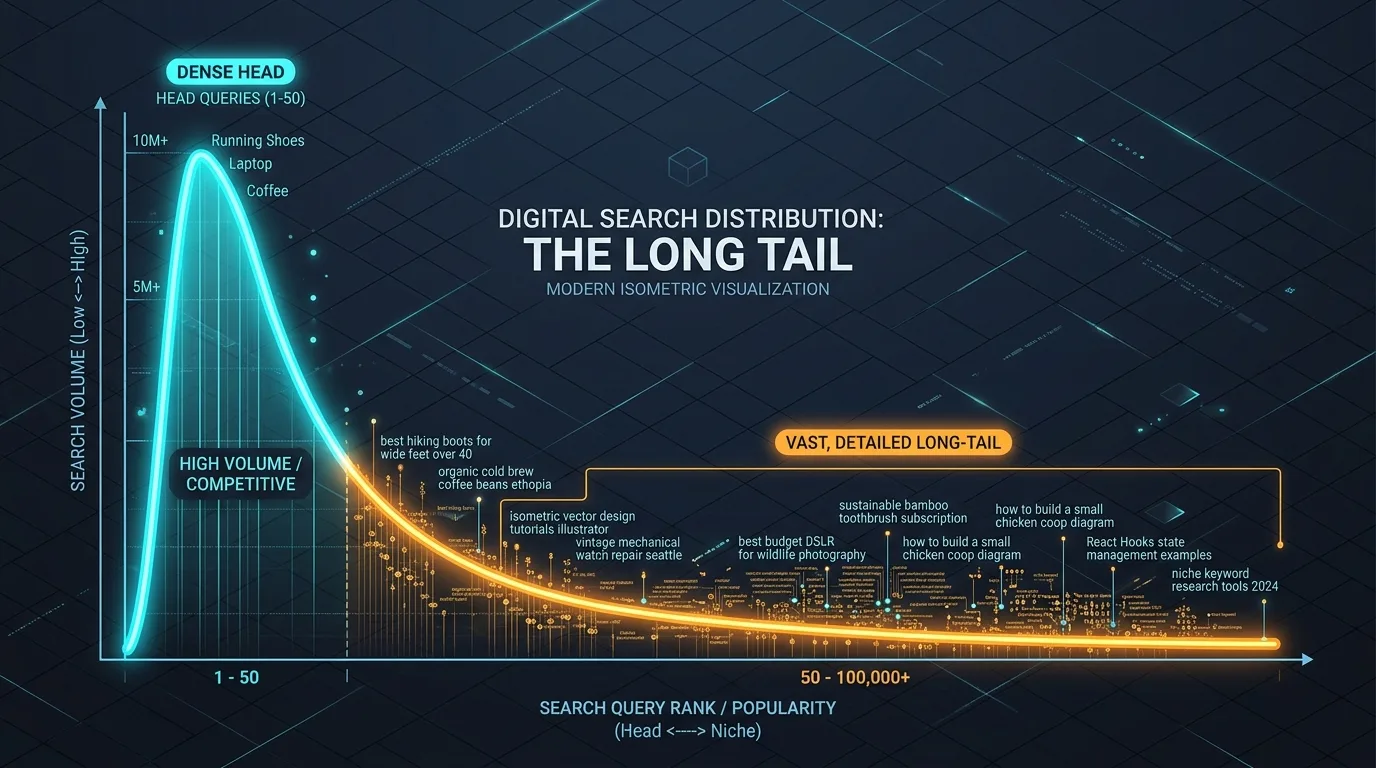
The Power of Specificity: A Guide to Niche Search Success
Learn how focusing on specific, niche search phrases can help your business bypass competition and attract high-quality leads with better intent.
Read article